Every Greenville County voter will face two countywide penny tax referendum questions on the November 2026 ballot, and residents of the cities of Greenville, Mauldin, Simpsonville and Travelers Rest will see a third, municipal one. This episode of Simple Civics: Greenville County takes a neutral look at what a yes or no vote on each would actually mean.
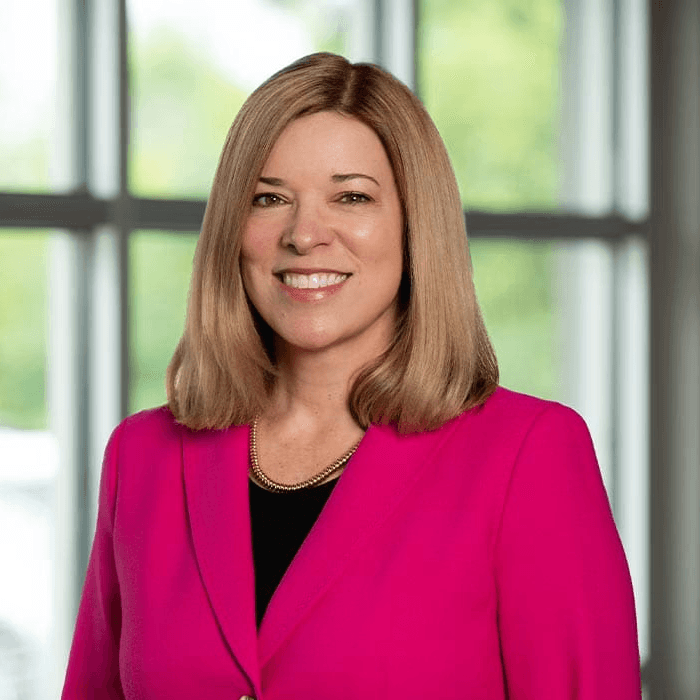
Host Katy Smith of Greater Good Greenville, which sponsors the podcast, is joined by Nathaniel DeSantis, the show's producer from Podcast Studio X and the builder of its candidate look-up tool. Working from the ordinances, state law and the history of past sales tax votes, and without consulting either campaign, they break down the legal text of each question.
They explain how the county's 1% transportation sales and use tax differs from the capital project sales taxes voters rejected in 2014 and 2024, how its roughly $1 billion over eight years would be split (90% to roads and bridges, 7% to bike, pedestrian and greenway projects, 3% to Greenlink transit), and why a second bond question lets work start sooner without adding a tax. They also cover the new Municipal Tax Relief Act, which requires cities to put at least 20% of their penny tax toward property tax relief; why one side calls it a penny and the other a 17% increase; which purchases are exempt; and the core arguments for and against.
Resources:
Greenville County Voter Registration and Elections (official referendum wording)
South Carolina State Election Commission (check your registration and sample ballot)
Simple Civics episode "Cities, Towns, Places, and ZIP Codes"
Greenville County's penny tax referendums explained
Katy Smith: When you head to the ballot box this fall, the candidates running for office won't be the only critical decisions before you. Across Greenville County, every single voter will face two countywide referendum questions, while residents living inside the cities of Greenville, Mauldin, Simpsonville and Travelers Rest will have an additional municipal referendum on their ballot. Colloquially known as the penny tax, these measures represent important choices regarding how our community funds roads, bridges, public transit, green spaces and municipal infrastructure for years to come. But with dueling yard signs, active social media debates and contradictory voices coming from advocacy groups on both sides, figuring out what a yes or no vote actually means can feel overwhelming. I'm Katy Smith with Greater Good Greenville, and on this episode of Simple Civics: Greenville County, I'm joined by Nathaniel DeSantis, our producer from Podcast Studio X, to cut through the campaign rhetoric and take a neutral, comprehensive look at what is on your ballot.
Together, we break down the legal text of each referendum, look back at the history of previous sales tax votes in our county, clarify which everyday purchases are taxed or exempt, and walk through the core arguments being made by both supporters and opponents. Our goal today is not to influence your vote, but to hopefully give you clear, reliable facts so you can do your own research, understand the math for your household and make an informed decision at the polls. Take a listen to demystify the referendum questions before you and learn how they could shape the future of Greenville County.
Nathaniel DeSantis: Welcome back, everyone, to another episode of Simple Civics: Greenville County. I am Nathaniel, and I am here with Katy to talk about the penny tax. So when you head to the polls this fall, you'll obviously see the candidates running for office, but that's not gonna be the only major decision on the ballot. Depending on where you live in Greenville County, you're going to encounter referendums asking whether you want to raise the local sales tax by one penny or, in some municipalities, potentially two pennies to fund things like infrastructure, roads and capital projects.
Katy Smith: Yeah, that's right, Nathaniel. I mean, normally on Simple Civics, as folks know, when there is a primary or general election and voters have the opportunity to cast a ballot, we bring the candidates into the studio so listeners can hear their qualifications and their philosophies firsthand. And in a sense, these ballot measures themselves are candidates in their own right. The challenge is there's not one person who can speak on behalf of a yes or no vote. And there are potential yeses and nos for a few different measures depending on where you live. I mean, we got flyers, we have social media debates, there's campaign groups on both the pro-tax and anti-tax sides who are making cases, in some instances with numbers and arguments that sound contradictory.
So our goal today is just to strip away the rhetoric the best we can and try to give you clear facts and explain that history and math and, most importantly, really walk you through exactly what you'll see when you go in to cast your vote.
Nathaniel DeSantis: That's right. And I will say our election candidate look-up tool is back up online, and if you type in your address and scroll to the bottom, you'll see all the referendums available to you with some plain English explaining what it is and then the full details below it. But let's start with the ballot itself, because what a voter sees will actually differ depending on your address. So every voter in the county will see the countywide proposal, but residents living inside certain city limits will see an additional question. Katy, can you break down the geography and the structure of what's actually on the ballot?
Katy Smith: Yeah. And let me say, whenever there's a referendum on the ballot, it can trip people up, you know. I mean, usually people are somewhat familiar with the people running. They've seen signs out for their names. They've seen them in the news in many cases. But then they get to the end of the ballot, and it's honestly just a lot of words that they have to vote yes or no on. And sometimes if people haven't prepared themselves, it's a lot to take in during the five minutes or so you have to vote. So, everyone, here is what's ahead of you when you go in to vote. There are two separate categories of referenda that are potentially on your ballot.
First, there's the countywide initiative that will be on every single ballot across Greenville County, regardless of whether you live in an unincorporated area or inside a city. And that county initiative actually consists of two separate ballot questions. So you'll see question one, which asks whether to impose a 1% transportation sales and use tax for up to eight years. And question two asks for authorization to issue general obligation bonds to pay for those projects upfront. We'll talk more about that. And then second, if you live inside the municipal limits of the cities of Greenville, Mauldin, Simpsonville or Travelers Rest, you will see a third question: a municipal, meaning the city, one-cent sales tax that's proposed by your specific city council.
If you live in the unincorporated county or in municipalities like Greer or Fountain Inn that are not running a municipal sales tax referendum this cycle, you will get to vote only on those first two countywide questions. And you know, your ballot is determined by your district lines and municipal boundaries. So the best way to verify what you're gonna see is to use the official voter tools provided by the South Carolina State Election Commission, which are available on our candidate look-up tool that Nathaniel mentioned.
Past sales tax votes and the new transportation tax
Nathaniel DeSantis: That ballot layout already clears up a lot of confusion, because it is really confusing. Now, long-time Greenville residents know this is not the first sales tax that has been proposed, and I even remember driving to high school back in the day when this was proposed and hearing it on the radio, to date myself. But why is this proposal back on the table? And how does this county measure differ from the ones that failed in the past?
Katy Smith: Yeah. Yes. So I've lived here during all of these, but I had to go back and do some research looking at the papers and such. So Greenville County voters first rejected a local sales tax effort in 2002. Then in 2014, county council placed a capital project sales tax on the ballot, and that measure failed overwhelmingly, with nearly 66% of voters voting no and only 34% voting yes. So after that defeat, the issue just sort of sat dormant for a while, but in the meantime, as everybody knows, the county's population surged and road conditions worsened, which has been a big topic of conversation. So county council put a new one-cent capital project sales tax referendum on the ballot in November of 2024.
And that 2024 vote, people might remember, was much closer. It failed by less than 3 percentage points, with about 48.5% voting yes for the tax and 51.5% voting no. What was really interesting about those results was there was a geographic divide. Voters who lived within the cities within Greenville County supported the penny tax by solid margins in some cases. And then voters who lived in the suburban and rural precincts largely voted against it. And in fact, we at Greater Good Greenville, which sponsors this podcast, we have a map of those results by precinct that we asked researchers from the Shi Institute at Furman University to develop for us back in 2024.
We can put that in the show notes; you can take a look around. So that change in 2024, in which it lost by a much narrower margin, showed that public sentiment had shifted, and it motivated municipal leaders in the cities in Greenville, along with some members of our Greenville County delegation, to pursue a new state law that would let cities run their own referenda, because that previously was not allowed. And it was allowed only in counties where there is not already a county tax on the books. And that is only in two counties in South Carolina, Oconee and our own Greenville County, hence those cities putting something on the ballot.
Nathaniel DeSantis: So the failed 2014 effort and then the narrow 2024 referendum were framed as these capital project sales taxes, whereas the county is now proposing a dedicated transportation sales and use tax. So maybe we can explain what's the legal difference between those two mechanisms.
Katy Smith: Sure. So under South Carolina law, a capital projects sales tax can fund a broad variety of public facilities like administrative buildings or courthouses or libraries or recreational centers or jails, in addition to roads. By contrast, the county's current proposal is legally designated as a transportation sales and use tax, and state law strictly restricts the use of transportation tax proceeds. It says every single dollar collected must go exclusively to transportation infrastructure, which is defined in the law by, and I'm quoting, "highways, roads, streets, bridges, mass transit systems, greenbelts and other transportation-related projects facilities, including but not limited to drainage facilities relating to the highways, roads, streets, bridges" and so on. So you get the sense that it is different and more specific.
And one thing of note is because the South Carolina General Assembly intentionally wrote greenbelts into the statute, which has to do with pedestrian infrastructure and trails and bikeways, county governments have the legal authority to allocate a portion of the tax collections to things like land preservation, open space acquisition and greenway corridors. It cannot, though, be diverted into general county operations, government facilities or administrative overhead.
Nathaniel DeSantis: And that brings us to a shift in our local leaders. There are people who didn't support this in the past who are supporting it now. So what led to that change in attitude?
Katy Smith: I think it came down, one, to the change in the type of tax they're pursuing, as I mentioned, going from the capital tax to the transportation tax, as well as the reality of county road data. So over the last few years, Greenville County has conducted a comprehensive engineering assessment of the entire road network. And it showed that more than 60% of county-maintained roads are in fair or poor condition. And on our major arterial and collector corridors, that number jumps to 75%. Engineers identified an estimated $3 billion infrastructure backlog to bring existing roads and bridges up to standard. And historically, people might remember this, that county council relied on a local road maintenance fee attached to vehicle registrations to help cover those costs.
But that fee was struck down in court several years ago. Then meanwhile, we have state gas tax revenues that are allocated in part to Greenville, but they are not enough to cover local road paving. So with all of this, a crumbling road network and some of these financial challenges, several of the council members who previously opposed the sales tax, either while they were on council or while they were running, concluded that a time-limited transportation tax was the only viable mechanism. And their reasoning on the record was that a sales tax captures money from the tens of thousands of out-of-county commuters and tourists who use our roads every day, rather than putting the whole burden on local residential property owners.
And this gives the voters the opportunity to say whether or not they want the tax. So that's what we gather has changed.
County penny tax spending and the bond question
Nathaniel DeSantis: Okay, so let's take a look at where that county money goes if the county penny tax passes. The proposal's estimated to raise roughly $1 billion over an eight-year period, after which the tax automatically expires unless voters reauthorize it. How is that revenue allocated by law?
Katy Smith: So the ordinance that the county passed to put it on the ballot sets a strict percentage breakdown for all of the net revenues collected over that eight-year window. 90% of the dollars collected, which is the vast majority, obviously, is legally dedicated directly to roads and bridges. And that includes resurfacing neighborhood roads and reconstructing failed road beds and widening bottleneck corridors, improving intersection safety, fixing bridge drainage across both unincorporated county areas and unincorporated cities. So you got the roads part. Then 7% is allocated to bicycle, pedestrian, greenway and active transportation projects, which includes trail corridors like the Swamp Rabbit Trail, and then also roadway-adjacent safety buffers and some conservation easements to preserve land from development.
That last 3% goes directly to public transportation to help Greenlink expand how frequently the buses come around, to upgrade bus shelters so passengers have a better waiting experience and to replace aging vehicles. The county does have a preliminary list of all the road and infrastructure projects for year one available on their website for residents to see. And then for each year of the tax, if it passes, county council will vote on a preliminary list of projects thereafter, after getting input from residents and referring to the road conditions of their priority list.
Nathaniel DeSantis: Okay, and then question two is about the bonds repaid from the transportation sales tax. Voters often get confused when they see two separate questions for the county tax. Why is a bond authorization question necessary?
Katy Smith: So question two is all about timing that results from question one. If voters approve the sales tax in question one, the county starts collecting revenue from the tax in May of 2027, with the first revenue sent to the county in June of 2027. Question two asks for permission to issue these general obligation bonds backed by that incoming sales tax revenue. And so what it means is that it lets the county borrow money upfront so that the construction and paving crews can start that high-priority work right away. You can imagine that the sales tax revenue is collected over eight years. So it's not all gonna come in right away, but it can let the work get started sooner.
And then what comes in is used to pay off the principal and interest on those bonds. It does not create an additional tax beyond the 1% approved, if it gets approved in question one. It simply determines whether the county can finance the projects up front or whether it must pay as it goes. And then also built into the ordinance is a county transparency committee that will meet monthly to review revenues and expenses to report to the council and the community.
City penny taxes and property tax relief
Nathaniel DeSantis: So let's pivot now to the cities. Residents in the cities of Greenville, Mauldin, Simpsonville and Travelers Rest will see an additional one-cent referendum on their ballots. Again, if you use the candidate look-up tool and your address is within that city, you will automatically see that at the bottom of the page, so that's there for you. But why are we seeing municipal governments pursue a sales tax for the first time? And what are those funds slated to support?
Katy Smith: Yeah, this is the result of that brand-new state law that I mentioned earlier. So for more than 20 years, South Carolina law allowed only county governments to initiate those local tax referendums. And if a county chose not to run one, the cities had no legal mechanism to levy their own local option sales tax. This year, our local Upstate legislative delegation helped pass the Municipal Tax Relief Act in the General Assembly, as I mentioned. And like I said, the law allows municipalities located in counties without an existing local sales tax to place their own one-cent capital project sales tax on the ballot.
And there are only two counties without this, our own and Oconee. So all six of our cities were eligible to do it, and all but Greer and Fountain Inn did so. So each of the cities developed their own project list. This is a capital project sales tax, so they make a list of the things they're gonna do. The City of Greenville's plan focuses on street resurfacing and congestion relief, improving our aging sewer infrastructure, neighborhood parks and some other capital improvement projects. Mauldin is dedicating funds towards infrastructure supporting neighborhood roads and drainage, its downtown city center and redevelopment, and fire station number five. Simpsonville's plan prioritizes municipal complex upgrades, fire and EMS facilities, traffic flow improvements and park enhancements.
And Travelers Rest is focusing on its downtown streetscape connectivity, stormwater improvements, pedestrian corridors and greenways. They have great lists, so I would suggest going to each of those, which we can link in the show notes, and looking in detail at them if you live in those cities. One thing I do want to note, and we've done an episode on this, is that just because you have a Travelers Rest mailing address does not necessarily mean you live in the city of Travelers Rest, and so on and so forth, because postal addresses are not necessarily the same as governmental boundaries. So that's why you need to look up your sample ballot. But in the meantime, I will say that many people are like, okay, wait, how does the municipal tax project relate to the county tax project?
How do the taxes intersect with each other? How does all this fit together? So I think you could say there are two separate questions. You could say yes to your city and no to your county. You could say yes to the county and no to your city. They're different sets of projects altogether. Both are just a 1% tax that the city and/or the county collects, and we'll talk about what is eligible for taxation.
Nathaniel DeSantis: And then this brings us to an important detail in the Municipal Tax Relief Act regarding property taxes that voters should understand. How does the city penny tax interact with a homeowner's property tax bill?
Katy Smith: So, I mean, it's a great and tricky question, like, wait, what? Okay, so that requirement is central to the state legislation, hence the name under the Municipal Tax Relief Act, because you're like, well, where's the relief? This is a new tax. Every city that enacts this tax is legally required to allocate at least 20% of all sales tax collected directly toward property tax relief for municipal property owners. So the money collected is proportionally credited to property tax bills. So for instance, the City of Greenville estimates that a homeowner with a primary residence valued at $250,000 would see an annual reduction of roughly $300 on their property taxes.
Travelers Rest estimates an annual rebate of about $278 on a similarly valued home. The remaining 80% of the revenue collected funds the specific capital projects on each city's list. We'll say more about how that is being used in the pro-con arguments, but it's a unique nuance to the city tax questions.
Penny tax math, exemptions and who pays
Nathaniel DeSantis: And then this brings us into a campaign debate, because this is where you might hear the most conflicting messages from people campaigning. Proponents describe this as, quote, "just a penny on the dollar," right? So, and then on the other side, opponents are saying that a rise from a 6% sales tax to a 7% sales tax is a net 17% tax increase on everything you buy, and they insist it is not a penny tax. Katy, walk us through that math, because it's two very different maths that I'm seeing right there. How can both sides look at the exact same referendum and present such completely different numbers?
Katy Smith: It sounds contradictory, but both statements are mathematically true depending on which variable you're measuring. So when proponents say it's just a penny, they're measuring the tax relative to the purchase of an item. If you buy an eligible item that costs a dollar, you are paying an additional one cent in tax. If you make a $100 taxable purchase, for instance, you're currently paying $6 in state sales tax. With a new county tax, if that passes, you would be paying $7, $6 to the state and $1 to the county. That's a 1% increase on the total purchase price. When opponents say it's a 17% tax increase, they're measuring the percentage change in the tax rate itself.
So again, South Carolina statewide base sales tax is 6%. If you increase that rate from 6% to 7%, that 1 percentage point jump represents a 16.7% increase in the total amount of sales tax revenue being collected. So if you get out your calculator, you remember what you learned with your X equals thing from math class in middle school (they probably do in elementary school now), going from paying $6 in tax to paying $7 in tax means your sales tax line item went up by 16.7%. Furthermore, if you live inside one of the four cities and both the city and county tax measures pass, your local sales tax rate would go from 6% to 8%.
So that's an additional two cents on the dollar, which others would say represents a 33% increase in the sales tax rate. So proponents are talking about the impact on your cash register receipt, while the opponents are talking about the percentage expansion of the sales tax rate. And understanding both perspectives helps you see past the talking points and really think about the real financial impact to you and your household.
Nathaniel DeSantis: And then another point of contention is what items are actually subject to this tax. So opponents often worry that a sales tax disproportionately impacts working families and fixed-income seniors. What protections or exemptions exist under South Carolina law?
Katy Smith: This is one of the most critical facts for voters to know, and I'm gonna list for you what is included and what is excluded. You're gonna have your own opinions about how important those things that are still included are. And I leave that to you. That's why you as a voter are using this to discern how you wanna vote. So under South Carolina state law, essential living staples are completely exempt from these local sales taxes. Unprepared groceries, the food you buy at the grocery store and prepare yourself to feed your family, that is exempt. Prescription medications are exempt. Motor fuel, the gasoline you put in your car, is exempt.
Residential rent, mortgage payments, home utility bills like electricity and water are also exempt. The sales tax applies to retail goods, restaurant meals and take-out meals or prepared food from the grocery store, like the beloved Pub Sub. I know you love that, Nathaniel. Electronics, clothing, vehicles and general consumer merchandise. So your opinion on how that goes might help sway how you vote.
Nathaniel DeSantis: I do love Pub Subs.
Katy Smith: I know you do.
Nathaniel DeSantis: And who actually ends up paying the tax? Is the financial burden carried entirely by Greenville County residents?
Katy Smith: So this is a key point that is made both by proponents and opponents regarding the tax. One of the pro-county tax websites has a calculator that uses National Bureau of Labor Statistics Consumer Expenditure Survey averages and current industry spending research for various income tax brackets. And based on those estimates, the median household in Greenville County, which makes $77,000 a year, would spend around $146 a year, or $12 a month, on the tax. Again, any given person or household's actual tax would depend on what they actually buy that is subject to the tax, not on their income. But these estimates show what people of various incomes tend to spend.
So supporters point out that the research shows that a substantial portion of the funds that the tax collects is paid by people who live outside of Greenville County, not residents. And an economic analysis conducted by researchers at Clemson show that about 30% of all sales tax collected in Greenville County is paid by visitors, tourists, business travelers and regional commuters, because we are a hub for tourism and for work and the like. So proponents argue that a sales tax is the only way to ensure those regional drivers help fix the roads that they wear down. Opponents argue that no new taxes are acceptable. They say that $12 a month for the average household is too much in this economy.
Some opponents also say that sales taxes are regressive, meaning they don't take into account a person's ability to pay. So regardless of your income, you're paying 7% sales tax, which they say is too much. Another nuance here is how voters who live in cities think about voting on the county sales tax referenda. Will the city voters say, hey, I'll just vote for my municipal tax because that's where I live and because I'll get a tax rebate too? County tax proponents would argue that you probably don't stay only in your city, and you find yourself on county roads or enjoy the Swamp Rabbit Trail or other amenities that make your life easier. County tax opponents would say, why don't county residents get a rebate just like city residents would?
And why should residents be taxed for both? Yes, there's always arguments on both sides.
The core choice and checking your ballot
Nathaniel DeSantis: So when a resident walks into the voting booth and looks at these referendums, what is the core choice before them? And I guess, how do the two philosophies balance out?
Katy Smith: So I guess I think it comes down to two distinct views on government finance. The argument in favor of the penny is that Greenville County's infrastructure deficit is urgent and undeniable, and they would say that waiting for the state legislature to fix local roads is unrealistic, that property taxes should not and cannot carry the sole burden of growth, and that an eight-year dedicated sales tax funded in part by visitors and legally locked into transportation infrastructure and services is the most equitable and transparent way to catch up on the decades of road maintenance. The argument against the penny tax is rooted in tax restraint and government accountability.
Opponents would say during a period of sustained inflation and high living costs, any tax increase places an unwelcome burden on local residents and businesses. They argue that county and municipal governments should fund basic infrastructure like roads, police and fire protection out of their existing operating budgets by prioritizing spending and cutting nonessential programs. And critics also express concern that if both the county and city measures pass, an 8% cumulative tax rate could push shoppers towards neighboring counties or online retailers.
Nathaniel DeSantis: What I will say is that regardless if you are for or against this, this is a great display of democracy in action, because the decision ultimately rests with you, since you're going to be voting on it. So you have the decision to do this and to vote on this or vote against this, which, as we talk about so much on the podcast, is why it's so important to go vote, and one of the beauties of democracy in action. And again, if you want to review your specific precinct details or read the exact legal wording of the ballot questions or check your voter registration before heading to the polls, you can visit the official Greenville County Voter Registration and Elections website or check the voter services portal at the South Carolina State Election Commission, which we'll put in the show notes. Or even easier, go to simplecivicsgreenvillecounty.org, find the candidate look-up link, and in the menu bar, enter your address, and everything is presented to you there.
And one of the things that we wanted to do was make it really easy to understand the decisions that you're gonna be voting on. So we've used very plain English terms to summarize the official ballot wording, because it's super convoluted and you shouldn't need a law degree to understand some of this stuff. And so we summarized it in two sentences, and then we also include the official ballot wording so you can look into that in more detail. But we wanted to make that really easy, and as I mentioned earlier in the episode, if you're in one of those cities that has a referendum, it will know that based on your address and show you the extra referendums that you'll be voting on at the bottom as well.
So you can see all of that there just based on your address, along with all the candidates you'll be voting for, your voting location and everything that we did the last time with the candidate look-up tool as well. So go check that out. We'll put that in the show notes as well, along with all the other official resources for you.
Katy Smith: Yeah. Well, thanks, Nathaniel, for the incredible work on that candidate look-up tool. And honestly, for everyone, the referenda wording is hard to discern, but that is because it has to be legally written so that it is transparent what's happening. But hopefully, we made it a little bit easier for you. And Nathaniel, I really thank you for the time to do this conversation. We did a lot of work to research this. We didn't consult either side as we wrote this, because we wanted it to try to be as black and white as we could make it. Hopefully, both opponents and proponents of the taxes feel we gave it a fair shake, or perhaps they're both slightly disappointed.
In either case, we tried to make it clear to you what it's about. So thanks for listening, thanks for going to the polls, and thanks for being a fan of Simple Civics: Greenville County.
Credits
Simple Civics: Greenville County is produced by Podcast Studio X and is powered by BuzzyPod.
A Greater Good Greenville project.