This episode of Simple Civics Ed Talks is brought to you by InformEdSC.org, South Carolina's most comprehensive, non-partisan data center for critical information about public education. To explore district and state-level data on students, teachers, and funding, visit informedsc.org.
Simple Civics: EdTalks is sponsored in part by Greenville Federal Credit Union, founded in 1968 by nine Greenville County Schools educators, and today serving 35,000 diverse members across Greenville County. Greenville Federal Credit Union, join and prosper.
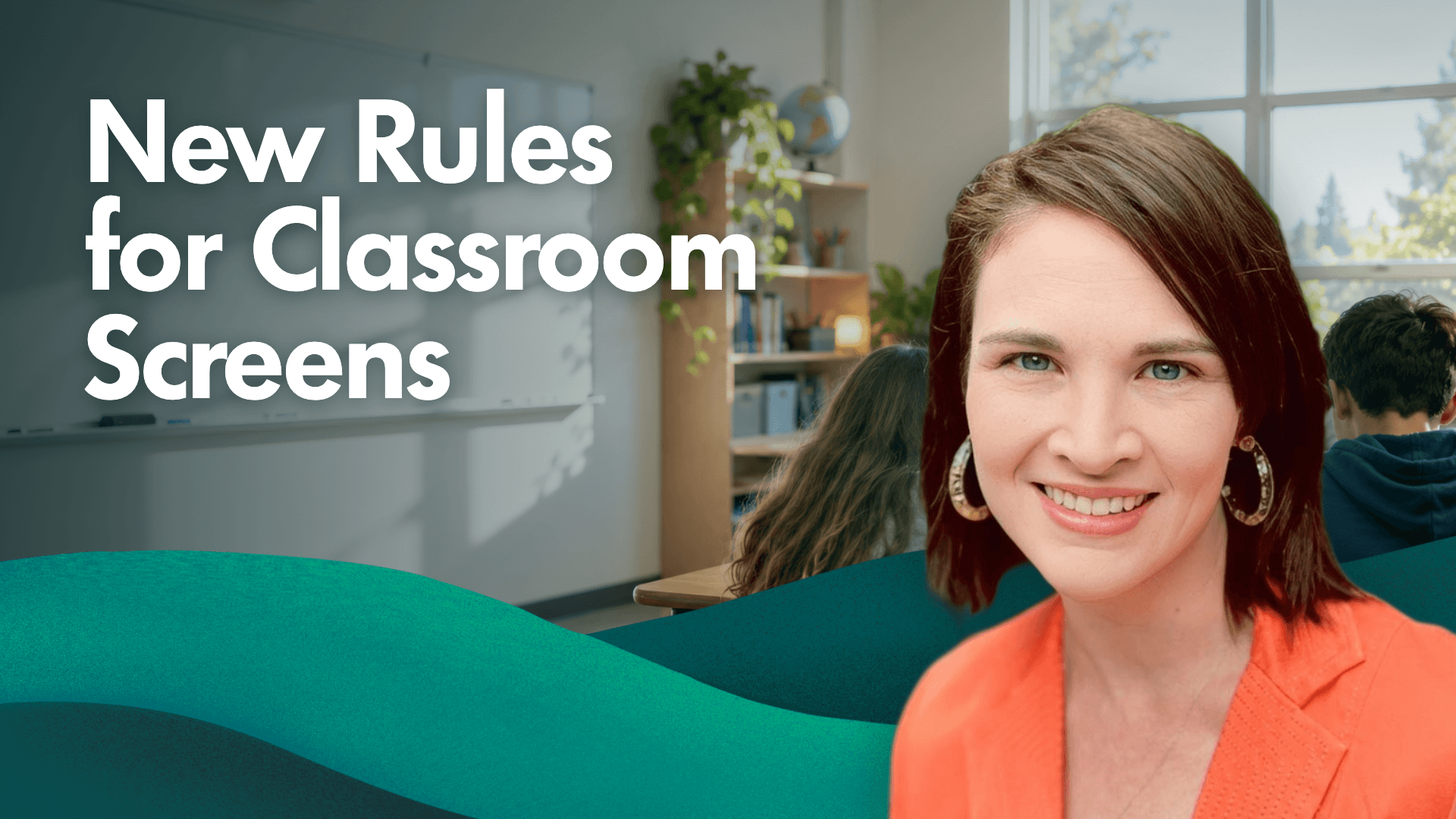
Greenville County Schools has a new administrative rule on classroom technology and a new framework for artificial intelligence, changing how much time students spend on screens from K4 through 12th grade. On this episode of Simple Civics: EdTalks, Catherine Schumacher of Public Education Partners asks what the rule means for every grade level, and why the district insists it is not a war on technology.
Dr. Susan Stevens is Associate Superintendent for Academics at Greenville County Schools, where she oversees district-wide instructional strategy, curriculum development and academic innovation. She brings decades of experience in the classroom and in school leadership, along with the perspective of a parent, to a question families across the country are asking.
The conversation covers what changes at each level, from K4 students who will mostly not use devices to secondary classrooms aiming for about 50% of the instructional block away from screens. Dr. Stevens explains how a year of conversations with students, parents and teachers, checked against analytics on app usage, shaped the rule. She also describes why generative AI is limited to grades 6-12 on MagicSchool, a pilot AI course in which 36 students earned Azure certification, and how the district will monitor and adjust the rule in classrooms this year.
Episode Resources:
Why Greenville rethought classroom screen time
Catherine Schumacher: Chromebooks came home during COVID and never really left. Five years later, parents, teachers, and even students themselves have been asking how much screen time in the classroom is actually helping kids learn. Greenville County Schools spent the past year digging into just that question, talking with students, listening to parents, and studying the data on how devices and apps were really being used. The result is a new administrative rule on classroom technology and a new framework for artificial intelligence that together mark a significant shift in how teaching and learning will happen across the county. I'm Catherine Schumacher with Public Education Partners, and on this episode of Simple Civics: EdTalks, I'm joined by Dr. Susan Stevens, Associate Superintendent for Academics, who brings decades of experience in the classroom and school leadership, as well as insights as a parent, to her work overseeing district-wide instructional strategy, curriculum development and academic innovation.
Susan walks us through what the new rules mean for students at every grade level, from our littlest learners with no devices at all to high schoolers aiming for half their instructional time away from screens. We talk about why this isn't a war on technology, how student voices sparked the change, and where AI tools like MagicSchool fit into the picture. Whether you're a parent wondering what this means for your child's classroom or just curious about how a district of our size navigates this national debate, take a listen.
Well, I'm really excited to be joined by my friend, Dr. Susan Stevens, to talk a little bit about technology and AI and the new rules we've got in place in Greenville County Schools.
So Susan, thank you so much for making time to talk today.
Dr. Susan Stevens: Thank you. It is exciting to be here. We have a lot of great things happening in Greenville County Schools and a lot of new things that we're transitioning to, so excited to talk about it.
Catherine Schumacher: Yeah. Yeah, we're recording this actually at the beginning of the school year, so things are kind of just getting underway. But I would love for you to talk a little bit about... last season we did an episode about technologies in the classroom. And since then Greenville County Schools has adopted a new AI policy, the trustees have adopted a new AI policy. But then also, you know, a couple of weeks ago the administrative leadership under your leadership in academics unveiled a really pretty dramatic new framework around technology use in the classroom and then student engagement around artificial intelligence. So this is a very hot topic, lots of conversations about it, and so, you know, I would think listeners would be really interested to hear a really brief overview of sort of the who, what and when of these new rules and how does it impact students in the classroom.
Dr. Susan Stevens: Yeah. Sure. I think first and foremost, we want our community to understand that nothing that we're doing is an attack on technology or a war against technology. Greenville County Schools firmly believes that technology is a component to student success and that our kids need to have a degree of proficiency as they transition beyond college and career opportunities beyond graduation to those opportunities. But that being the case, we really had to look critically at how we were using technology and for what purpose we were using it. We spent a lot of time talking with students over the course of the last year, and that's really what kind of initiated our attention to the fact that we might have been a little more aggressive with using technology for non-instructional purposes, to a degree that we were actually doing more harm and taking away from instructional time.
And so as those conversations began to happen, we began to spend a lot of time pulling analytics data and looking at the apps that were used across schools across our district. So many apps, and a lot of that, of course, came out of COVID and available funding and e-learning and all of that transition, but we had not taken the opportunity to really dial into how those things were being used today. So we spent a year of having really difficult, hard conversations with our students, our parents, our teachers, our principals, looking at the analytics data, looking at the time that kids were spending on devices, the time we were able to monitor students being on devices.
But then most importantly, what is that doing for student learning? Is the technology actually improving student learning? Is there any sort of negative outcome that we hadn't considered? And then the critical question is, if we're using technology to instruct or inform, is it replacing something? Is it substituting for student interaction or for teacher-led interaction? And what's the trade-off for that? So as a result of that, we are really excited that we feel like we have found a happy medium with some of the guidance that we have been able to put out that will increase the amount of student interaction, the amount of teacher-led instruction, the amount of traditional student-to-student, small-group, whole-group instructional models that we're familiar with, and it'll rely much less heavily on technology-based instruction.
Catherine Schumacher: Although technology is part of it, right, and part of it is like figuring out at which point... and I think that was one of the things when parents sort of... when this came out, the idea that, all right, our littlest learners don't really... Yeah.
Dr. Susan Stevens: Absolutely. Absolutely. Yep. Right, it's all about using the technology when it is appropriate, and what are you using for?
Device rules by grade level and teachers' views
Catherine Schumacher: Right. Right. And so the actual framework itself is available on the district website. And so we'll point to that, we'll put it in the show notes so that folks can sort of look at, all right, here's what it is for, it's what, like, K4 through two second...
Dr. Susan Stevens: Yes. Yeah. So our K4 students for the most part won't be using Chromebooks, won't be using devices. Kindergarten, first grade students will have a small number of devices in each classroom that they can use whole group or small group instruction, kind of like... and of course state-required assessments. And then our older elementary students will still have one-to-one devices, but they'll only be using those for the approved apps and also the state-required assessments. And then our secondary students in 6-12 will have one-to-one devices. And our goal for our secondary students is really to aim for about 50% of the instructional block being non-technology-based. Of course, we've got a lot of courses in Greenville County that are technology driven, and those are kind of a different animal.
We have apps and we have parameters for those classes to make sure that students can still access the technology they need for those specific courses. Yeah.
Catherine Schumacher: Right. Yeah, teacher-led stuff, yeah, yeah. Right, right. So the idea, and there was something as I was listening to the conversation about this new rule and the new directives, that just printing worksheets is not engaged teaching or learning either. And right, so the idea that we just need to go back to pencil and paper for everything. Well, that doesn't solve the problem either. This is really more of a pedagogical engagement question, and how is that interaction, how are kids working together. You know, I've often said in my conversations with people that, and again, I'm in a privileged seat where I get to see things happening, think the idea that kids were just staring at their computers all the time was misinformation. I don't think that was accurate. I know it wasn't. But I do think that this is a really great sort of step in the right direction, and I think that using the data to sort of figure that out, that was sort of interesting. So speaking of that sort of process, so you talked about talking with students and that this was really sort of, in a lot of ways, student-led, student-started, kind of. Talk a little bit about educators.
What were the conversations with teachers about, and how have those conversations sort of played out as you put this rule in place before the beginning of the school year? I'm sure they're ongoing.
Dr. Susan Stevens: Correct. Right, absolutely, correct. That's exactly right. I agree. Right. Yeah. Absolutely. Absolutely. And we don't anticipate in those conversations slowing down anytime soon, especially as we get underway this year. It's really important that we stay plugged in with the teacher experience and we support and listen to whatever challenges and barriers they're coming up against. But as we began the conversations and we began speaking with teachers, we really had this continuum. We had especially teachers in the elementary school that felt a sense of pressure to use devices for... I mentioned some of our state-required assessments that are out there, some of our literacy screeners and things, and they felt a sense of pressure to use the devices to have students be ready to be successful on those assessments.
Catherine Schumacher: Yeah. Yeah, on the assessments. And listeners, we're gonna do a separate podcast about assessment and testing, so you'll be able to sort of listen to that to hear some of the challenges in this space as well.
Dr. Susan Stevens: Yes, yes. And so there we had some teachers certainly that felt a pressure to use devices for that. You know, I think we also live in this age of efficiency, and time is the most limited resource for any teacher, and there's a lot of things about technology that can help us be more efficient, but that doesn't always translate to higher-quality instruction for students. It means we can maybe get information in front of them quicker, but it doesn't necessarily mean they're learning the information or that we are better teachers because of it. And so we really had to have some hard conversations about that, how technology was being used and for what purpose, especially when it was in front of students.
And then we had on the other side of the continuum, of course, we've got some teachers who are highly proficient with technology, but they know how to use it with intentionality, they know how to use it to leverage learning, they know actually how to use technology to build engagement and interaction with students. And so to your point earlier, we know for a fact that students weren't just staring at screens all the time. But we also know, and there were some small pockets where that may have been the case more than we ever would have wanted for any student. So this, our administrative rule, is an attempt to find the balance to be able to help our educators make those decisions about when it is appropriate to use technology, what content is most appropriate for, and then also which specific students it's most appropriate for.
Catherine Schumacher: Yeah. Yeah. Yeah. Right. Yeah, and also it gives... just because it's the same for everybody. And that's one of the challenges with Greenville County Schools. It's such a big district. And there are differences in every community. Every school is a little different, and principals and leaders, they have a lot of autonomy, as they should in a district like this. Clarity around it is very helpful, both for the educators and the parents and the students and admin as well.
How parent feedback shaped the technology rule
Catherine Schumacher: So I'd love to talk a little bit about that, sort of the parent advocacy piece of this. Obviously there's been a lot of parent conversations and frankly concerns from parents about technology, particularly coming after COVID.
Dr. Susan Stevens: Absolutely. Mm-hmm. Mm-hmm. Mm-hmm. Yes.
Catherine Schumacher: And again, I think some of that was well thought out. I've had some of that myself. I miss snow days, and I'm like, I understand e-learning, I understand absences and making things up, but like, that I do feel is something that... I don't know, then sometimes I feel like just an old person, like, get off my lawn kind of thing. But talk about the role of parent advocacy, not only sort of in having this ping for the district as something that let's engage around this issue, but also sort of going forward and how those kinds of conversations will continue to happen.
Dr. Susan Stevens: Yeah, I think honestly that has been one of the most powerful byproducts of this recent year of work and interaction with our stakeholder groups. I mentioned the continuum that we have for our teachers and their viewpoint of using technology, and the exact same continuum exists for parents. We have parents who would prefer for us to not use any devices whatsoever at any point, and then we have parents that are the complete opposite of that. Exactly, exactly.
Catherine Schumacher: Of course, yeah. Who worry if you're not using the technology their kids are gonna be behind. Yeah, it's wild.
Dr. Susan Stevens: And so, yeah, how do we find an opportunity to find balance in that? So the first thing, you know, that we really did was listen. And again, when we began to hear from students that our students were seeking a different experience and different strategies. And then we began to triangulate that with some of our parent perspectives, some of the things our parents had been saying about the amount of time students were on screens and on devices, the way their students were beginning to communicate using those devices. And then we began to look at the academic achievement and the app usage. You know, there was some consistency between what our students were saying, what our parents were communicating to us, and then certainly what we were seeing in the analytics.
And so we just had a lot of open dialogue, and we took a lot of parent feedback, and certainly as we began to flesh out what this administrative rule would contain, really took into consideration how do we value the opinions of all of our stakeholders. Most importantly, how do we make sure that we still provide our students with what they need to be successful graduates and beyond? But then also, how do we make sure that we leave space for our parents to feel confident about the experience that their students are having while they're in our classrooms?
Monitoring the rollout in classrooms
Catherine Schumacher: Mm-hmm. Yeah. So interesting. So, you know, speaking about... you've used the word analytics a lot. I know that you're a sciencey person, so analytics are your jam. But really, Greenville County Schools uses data. I mean, it's the foundation in a constant evaluation and assessment, using data, using sort of that observation and combining that with what you hear from the students and the teachers and the parents. So what comes next in terms of thinking about how successful are we being with this new approach? What does it look like? Is it impacting things in positive and/or negative ways?
So could you talk a little bit about going forward? What does continuous improvement look like in this space?
Dr. Susan Stevens: Yeah. Yeah. Yeah. Yeah. So I think first and foremost, we really wanna see how it rolls out. On paper it looks great. Right, exactly, exactly. And...
Catherine Schumacher: Yeah, looks great. A framework looks great. It's like a rubric. Give me a rubric. All educators love rubrics, right? Yeah.
Dr. Susan Stevens: Because it looks fantastic on paper, like, how does that actually manifest in a building? What does it look like in a kindergarten classroom with three to five devices? What does that look like for a teacher? Correct, correct. Yeah, so now really our job and our work is to inspect it, to be in classrooms and to be available to problem-solve and troubleshoot and to help figure things out, because, you know, if we know anything about technology, we know it's always gonna evolve, and we know it's never gonna work probably the way we want it to at the time we want it to. So what does that look like for a teacher?
So we really have been present with teachers to try to figure out the logistics of operating their classrooms with these changes. What does that mean for teacher planning? What does that mean for grading? What does that mean for the types of prep work they need to do? And how do we support them with that? And then on the student side, how do we make sure that our students continue to get what they need to receive in terms of high-quality instruction? How do we know that we've supported the students and the teachers in these new environments? And a lot of that comes from listening and being present, and we've got stakeholder groups of teachers and principals and instructional coaches that we meet with, get feedback with.
We've got some feedback loops with them, and we will just continue to monitor and monitor and monitor and adjust it.
MagicSchool, AI training and student voices
Catherine Schumacher: Yeah. Yeah. And thousands of teachers and dozens of schools, and yeah. Mm-hmm. Yeah, and I guess all of this, you know, we didn't explicitly talk about AI, but that really falls into the... I mean, basically the same thing is going on around AI, and even more, I think, even more guardrails around that, and then, but also recognizing that it can be an enormous time saver for teachers.
Dr. Susan Stevens: Yes, absolutely, yeah, yeah, yeah. It can be. It can be.
Catherine Schumacher: And you know, we're all wrestling with this. I'm wrestling with this at PEP. How do we use it, what do we use, how do we put the... what's the... yeah, what... And so I think that's... but it's the same kind of thing, I assume.
Dr. Susan Stevens: Yeah, what's the role? What's the role of it? Yeah. So for Greenville County, in terms of generative AI, we've restricted generative AI for only students in sixth through twelfth grade using MagicSchool, because that was a product that was a great fit for us because of the safety and security features that it offered us and the teacher autonomy, the teacher control of that platform, and still allowed students to practice with tools that were relevant in the workplace beyond graduation. So for us that really has been a game changer for us, but we still are in our infancy with teacher understanding of it and teacher acceptance of it. And so we're not mandating that teachers use it, we're encouraging it, we're doing a lot of training. We've got a pilot AI course that we have in two of our high schools that has gone extremely well.
We have 36 students who have completed their Azure certification through that. That's a CTE course. But the efficiency that AI can provide and how do we build the teacher toolkit on how to use those things is still something that we're working on. You know, there's some safety and security features that we need teachers to understand on the tech side too, in terms of student information and the information that they share in it. So we've provided tools and training on that, and we just continue to revisit that as it evolves.
Catherine Schumacher: Yep. Aren't we all? Yeah. Yeah. Right. It's a lot. It's a lot. Yeah.
Dr. Susan Stevens: It's exciting, you know, it's exciting. We just released a story on Greenville County's social media today about two of our students. We had the opportunity to go to Boston this summer, and they participated in the student senate to help draft some of the very first foundational AI legislative recommendations. And it was really fascinating to hear students from all across the country talking about these exact same issues and to be able to articulate what they would recommend from the parent lens and the student lens and the teacher lens, and it was really, really fascinating to hear the critical thinking that students have put into this. Absolutely.
Catherine Schumacher: I saw that. Mm-hmm. And affirming. It's affirming to hear what a good job... and like, when you empower students to have their voice lifted up, what you get. Yeah, it's great.
Dr. Susan Stevens: They are very aware of the dangers, and that's what really struck me. They are not naive to the power of the tool and to what it can do for them personally and in terms of our industry and our national conversations that we're having, but they are very tuned into the potential dangers and pitfalls.
Parent information sessions and resources
Catherine Schumacher: Yeah. Yeah. Well, as we close out, what else... is there anything else that you would like the community to really understand about this issue? Obviously, we could talk about this for a really long time. There are hours and hours and hours worth of content around that. But, you know, if anything else you want them to know, and then if there are other sort of resources, we mentioned that the rule is on the district website and things, but is there anything else you'd want them to sort of know and hear from you?
Dr. Susan Stevens: At eight. Yep. Mm-hmm. Mm-hmm. Yeah, you know, we have lot of parent resources available. We've updated a lot of resources on our district website, including something that's gonna be released will be some information about our parent information session that we're having about this new administrative rule. I think our first information session on that is August 24. I don't know when this will go live, but anticipate running a series of information sessions that parents will be able to hear presentations and see how this is actually manifesting in the rooms.
Catherine Schumacher: Yep, probably later than that. Oh, good.
Dr. Susan Stevens: To see some of the analytics that we're looking at, to be able to with complete transparency show them kind of what we're looking at and how we're monitoring things. We're looking at some opportunities to increase some parent stakeholder groups as well, to see as we continue to now build out some of our CTE courses, to make sure that we continue to have evolving technology and current technology available, making sure that they are aware of what those technologies are and how we're using them, and then conversely also making sure that we are highlighting the best practices that don't include technology.
Catherine Schumacher: I love hearing that, yeah. Right.
Dr. Susan Stevens: And, you know, again, just to reiterate, this is absolutely not a war on all things technology or some sort of...
Catherine Schumacher: Technology brought us podcasts.
Dr. Susan Stevens: Exactly. You know, all...
Catherine Schumacher: Remember iPods and things? It's so funny. All the things. I know.
Dr. Susan Stevens: The things, all the evolution. But this is an exciting chapter for us, but it's also an opportunity for us, most importantly, I think, to look at the value of every minute that we have with students and look really critically at the tools that we're using for instruction during those minutes.
Catherine Schumacher: Oh, great. Well, Dr. Susan Stevens, thank you so much for joining me for this important conversation and for everything that you do to lead the evolution of the district's work in this area. So thanks so much.
Dr. Susan Stevens: Absolutely, thank you for having me. Thank you.
Credits
Simple Civics: Greenville County is produced by Podcast Studio X and is powered by BuzzyPod.
A Greater Good Greenville project.