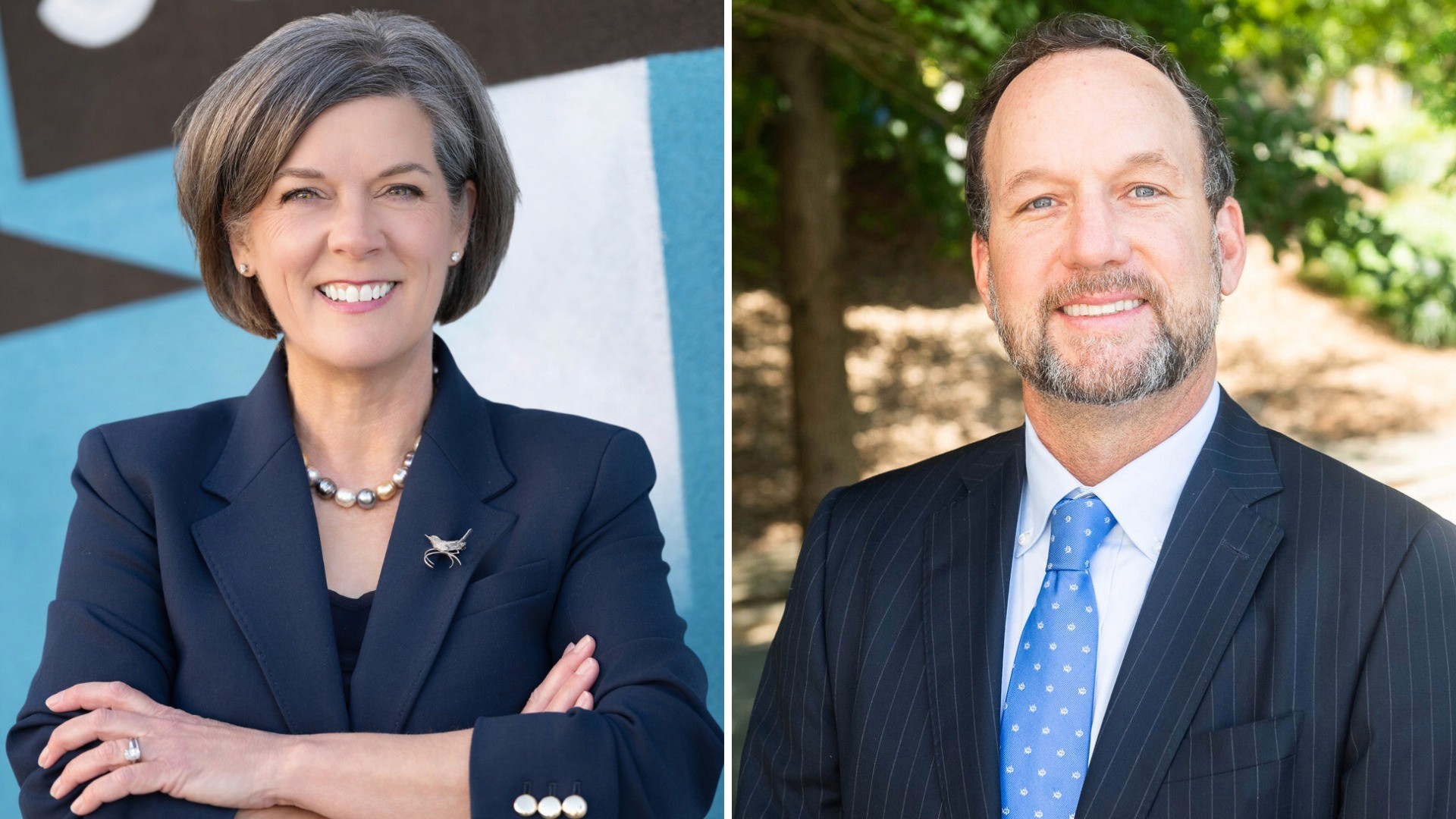


Who's running for South Carolina House of Representatives in District 27? Meet John MacCarthy and David Vaughan, the candidates on the ballot in the November 3, 2026 general election. Hear where they stand on the issues facing voters, then share this episode with your neighbors before Election Day.
How the interviews worked:
All candidates received the same question at the time of their invitation to join us, and they were given 10 minutes for their interview. Candidates were allowed to bring along a companion, such as a campaign manager, family member, or friend, and to record our session themselves. There were no edits made to the interview.
Candidate links:
Introduction to SC House District 27 Candidates
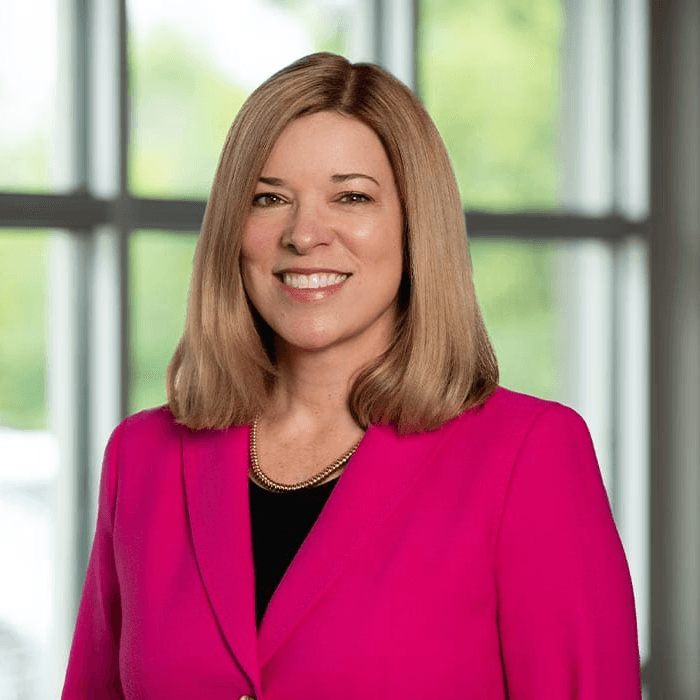
Katy Smith:
When you go to the polls on November 3rd or during early voting, you have the chance to vote for important offices such as U.S. Senate, U.S. Congress, governor, and state House members. We want to help you get to know your candidates so you can make an informed decision.
I'm Katy Smith with Greater Good Greenville, and on this episode of Simple Civics Greenville County, we feature interviews with your candidates for State House of Representatives District 27, Democrat John MacCarthy, and Republican David Vaughan. District 27 runs along I-385 covering Southeast Mauldin, most of Simpsonville, and parts of Northwest Fountain Inn.
Here's how the interviews worked. All candidates received the same questions at the time of their invitation to join us, and they were given 10 minutes for their interview. Candidates were allowed to bring along a companion, such as a campaign manager, family member, or friend, and to record our session themselves.
There were no edits made to the interview. We've put links to the participating candidates' preferred internet presence on the episode page.
Meet John MacCarthy: South Carolina House of Representatives District 27 Candidate
First up alphabetically is John MacCarthy. I'm pleased to be joined by John MacCarthy, who is running for South Carolina House District 27. Thanks so much for being here.
John MacCarthy:
Well, thank you very much for having me here today and for the service that you provide to our community. I'm John MacCarthy, and I'm running again as a Democrat for the South Carolina State House District 27, which is Simpsonville, Mauldin, and Fountain Inn.
So why am I running? Well, for the last two decades, the party that has controlled our state has focused on protecting the wealthy and the powerful special interests. They've done a great job of looking out for the interests of the upper middle class, that is, for people like them.
As a Christian, I know that's wrong. I know that I'm called to help poor people, protect the weak, treat others as I would want to be treated if I were in their shoes, and to oppose state-sponsored religious coercion. These are not the values that are being practice by the party that controls our state.
But they are the values that will guide my actions in the statehouse, and that's why I'm running. Furthermore, my daughter and two grandchildren live here in South Carolina, so I have a vested interest in the future of this state.
So let me share with you a little bit about my background. I have a rather unique career history that's very different from those currently serving in the statehouse, which consists primarily of lawyers, business owners, and folks with interests in real estate and construction. Over the course of my career, I've served as a teacher, a scientist, an engineer, and a technical manager.
I began my career by earning a PhD in physics from the University of Notre Dame, with a concentration in biophysics and biochemistry. I then spent five years as a college professor and then moved on to spend the next 30 years as a systems engineer, where I learned to integrate the perspectives of diverse groups of people to develop complex systems that use advanced technologies to meet the needs of our country.
I was then asked to serve as the director of the University of Maryland's systems engineering graduate program, which I did for five years before retiring here to Simpsonville. I'm currently a part-time lecturer at Spartanburg Community College, Wofford College, and the Furman Lifelong Learning Program, where I teach courses in physics, global warming, and artificial intelligence.
At Wofford, I led an undergraduate student research project that built a model for the upstate electrical energy grid. This background provides me with the knowledge and skills currently lacking in our state legislature to address legislation related to technologies that are critical for building a strong South Carolina economy and to protect our environment.
Katy Smith:
Thank you. What do you believe is most on constituents' minds that you can address should you win?
John MacCarthy:
Well, for the last five years, Republicans have been more focused on fighting culture wars than on addressing the real challenges facing our state. Let me address five of these real challenges.
First, working families are struggling with rapidly increasing costs of living, and our Republican leadership is doing nothing to address this. Over the last year, grocery costs have increased, and gasoline has increased by 30 to 50 percent. Over the last three years, the cost of buying or renting a three-bedroom, one-bathroom home in Simpsonville or Mauldin has increased by around 12 percent, while the cost of home insurance has increased by about 30%.
Employee health insurance costs have risen by about 20 to 35 percent, and automobile insurance costs have increased by about 25 percent. Again, the focus of the Republican leaders is on protecting the interests of insurance companies and other special interests, and not on bringing down the costs of living for working families, young people, and seniors.
Secondly, we are paying way too much for electrical energy and natural gas. The residential electrical energy rate, that is the rate we pay, is about twice as high as that paid by industry. And yet industry uses more power. Furthermore, over the last few years, rate increases for us residential users has been higher than that for industry.
With respect to natural gas, residential rates for natural gas are more than twice that paid by industry, and industry uses three times what we use. Furthermore, over the last three years, residential rates for natural gas have risen about 11%, while industrial rates have decreased by 40%. This is another example of the Republican leadership protecting special interests and ignoring the interests of those that elected them.
Third, South Carolina consistently ranks in the bottom 10 states with respect to education. Our state's economic and civic welfare rests on the strength of our public schools, and they need improvement. Our schools are having trouble recruiting and retaining teachers.
According to the Palmetto State Teachers Association Candidate Survey, disruptive and dangerous student behavior is one of the top concerns of South Carolina teachers. Our teachers want state regulations revised to provide clear and comprehensive guidance on how to address this.
Also, one of the principal causes of poor performance by students is family-related stress, often financially related. And yet, South Carolina's schools have only one-tenth the number of social workers per student as the national average. These social workers are critical to helping families find and receive the services required to reduce stress on their children.
Fourth, working families are not able to find affordable child care. This affects both middle-class and low-income families, but especially it's severe for single working parents. 53% of children in South Carolina live in financially stressed households, and roughly 40% of the children in South Carolina are in single-parent households.
The median family income for a single-parent family of three is about $36,000, which is close to the poverty level and far below the accepted financial stress threshold for such a family. The cost for full-time daycare in South Carolina is a little over $10,000 per child per year, which is almost a third of a single working parent's income.
Now, while the state does have a South Carolina child care scholarship program, which in theory provides a significant subsidy to financially stressed working families, it is currently not accepting new applicants, and it provides scholarships to less than 5% of the children living in financially stressed households. We can do better.
Finally, over the last year, there's been a rising dissatisfaction with the corruption, chaos, divisiveness, and waste, fraud, and abuse of power of the current administration, and the Republican leadership at all levels that enables it. The current Greenville Republican Party is actively working to disenfranchise Republicans who refuse to tow the MAGA-party line, and derisively refers to them as RINOs.
We need to restore our faith in government by electing leaders of strong moral character who share our values regardless of their political party.
Katy Smith:
Thank you. What would be your plans to address those constituent concerns and interests?
John MacCarthy:
Well, when elected, my first priority will be to serve the interests of all of the people in my district, not just the wealthy and special interests. I will work to establish a fair distribution of energy rates for residential users.
I will work to fully fund and expand the South Carolina Child Care Scholarship Program, and I will pursue legislation to improve our public schools based on the advice of the state's foremost experts on education, our public school teachers.
More specifically, I will work to implement the recommendations of the Palmetto State Teachers Association, which includes updating Regulation 43-279 to provide clear and consistent guidance on how to address persistently disruptive and dangerous behavior.
And I will pursue practical solutions to provide more affordable housing, reduce insurance costs, protect our environment, and expand economic opportunity so that working families, young people, and seniors can build stable and secure lives.
Finally, I have a message from my Republican brothers and sisters who are dismayed by the direction that their party is heading. You have the power to return your party to its original values. Parties only change if they lose elections. Get your party's attention this election. Register your protest in November by voting for me and for other Democrats. Thank you.
Katy Smith:
Well, thank you so much for joining us, and thank you for your willingness to serve.
John MacCarthy:
Thank you.
Meet David Vaughan: South Carolina House of Representatives District 27 Candidate
Katy Smith:
Next up is David Vaughan. I'm pleased to be joined by David Vaughan, who's running for re-election for South Carolina House District 27. Thanks so much for being here.
David Vaughan:
Thank you for having me.
Katy Smith:
Tell us about yourself and why you're running for this office.
David Vaughan:
Well, thank you. It's good to be here. I am one of those weird people who am from my district, have lived in my district my whole life, except for a three-year stint in training in Atlanta.
Couldn't wait to get back home, but I was raised in Mauldin and lived there for the first 30 years of my life and then moved all the way to Simpsonville for the remaining 30 years that I've been there. So I represent that district. My wife and I celebrated our 37th wedding anniversary. We've raised three beautiful kids in that district.
Mauldin and Simpsonville is my home. And so it's an honor to be able to represent them, my home. And that's the reason why I ran the very first time was to give back. That area has raised me, and for me to be able to give help and represent and anything I can do to help further the Mauldin-Simpsonville, a little bit of Fountain Inn area that I have, the Golden Strip, as we call it, it's been a true honor.
Katy Smith:
Thank you. What do you believe is most on constituents' minds that you can address should you win?
David Vaughan:
Well, I think right now there's a lot of uncertainty in our area, in our country. Economy's a big thing. But the two things I hear the most about are roads and taxes. And for me, I think it's taxes.
You hear a lot about income taxes, but I think property taxes are a big deal. It's a big ticket item for everyone. So those are the two primary things.
In Greenville, we have about 4,000 miles of roads. In the state of South Carolina, we have more than 41,000 miles of road. We're the 10th smallest state and we have the fourth largest system of roads, so we have a very big project.
We did a big bill in this past session where we tried to overhaul, if you will, the whole entire DOT system, the state roads, and how we can make things easier, make projects go faster, quicker. One of the things that we tried to do was reduce the inventory.
As a businessman, I built my first business in the 90s, and as a businessman you try to think, okay, let's reduce inventory. Well, when we put that in the bill that we wanted to try to give more roads back to the counties, more back to the municipalities, we got an overwhelming response of, "We don't want the roads."
And then the other side of it was, now DOT is just trying to give the counties and the cities their roads back and make them do it. And that's really not the case, but we have a huge inventory in the state. So that's a big thing. But what I'm hearing more than anything is congestion.
It's been a quick trip from, "Hey, fix our roads," to, "Hey, it takes me 30 minutes, what used to take 15 minutes." And that's just such a population growth in Greenville and in South Carolina. We've grown to almost 6 million people in our state, which is an unbelievable thought.
So with that, we're going to work on roads. And I think that's an important part. And we're going to work on taxes. You hear a lot about we're trying to eliminate the sales tax or maybe we're going to eliminate the income tax.
With taxes, you've got to have money come in from somewhere. You hear states like Louisiana, Florida, they get away from income tax, but they make it up somewhere else. You can't not make it up somewhere.
I think you'll see our state try to go put more money in the consumer's pocket, or in the individual and the homeowners and the people who are living here, because the economy is just a big thing. We have a lot of people living paycheck to paycheck. So if we can put more money in individuals' pockets, I think all my constituents would be happy to.
Katy Smith:
Thank you. What would be your plans to address those constituent concerns and interests?
David Vaughan:
Well, as stated, those are the two primary things that I hear. So of course, I want to continue to work on that. We had that big bill last year, and I think it's generated some things.
In Greenville, you'll see the city of Greenville, you will see the city of Mauldin, you'll see the city of Simpsonville, the city of Travelers Rest, and the county of Greenville will all have a penny tax in regards to roads. And that's kind of what came out of that bill.
It's going to be quite confusing, I think, for a lot of people. They're like, "I'm going to end up with all these pennies that I'm paying for roads." So I think that one of the things I hope to help with my constituents are: let's explain, let's talk about that, let's understand exactly what it means if the county gets the penny, if the municipality gets the penny.
The one thing about the municipalities and the cities is that the penny goes towards property tax relief. It has to—25% has to go towards property tax relief. So that's a big thing. Again, focusing on taxes, focusing on roads. I think that's where everybody's at and the constituents, so I'll continue to work on that.
Another thing that I want to work on is there's a balance between our civil liberties and our safety that we have. Just as we have freedom of speech, but you can't yell bomb in an airport, right? So there's this balance. And there's so many products that are being sold over the counter that I think are dangerous for our children today, so that's another thing we'll continue to work on.
For the last three years, we've been working on trying to get several products off the counter. We've got hemp-derived—the Farm Bill kind of got through and then it got manipulated, and they were able to turn hemp into THC. And we got these THC drinks that are being sold over the counter to a 12-year-old, 15-year-old. So we've got to continue to work on that.
There's a product, things that I didn't even know about, Whippets, that come in pallets and they're sold out, and they're so dangerous. The nitrous oxide that you used to hear about people would use with the Reddi-wip cans. So these products are being sold over the counter. And while we don't want to infringe on civil liberties, at the same time, there's a safety aspect and we have to protect our children. And that's another thing we'll continue to work on.
Me being on the House Education and Public Works Committee, I am the subcommittee chairman of transportation. I was able to get to that position because roads were always my focus. But education has become a big thing.
We're continually trying to get to school choice, and there's so many different opinions on that, but I do believe that when the money follows the child, it opens up so many great expansions that we can go forward with. So I know we're going to continue to work on that.
We're going to continue to make life better for the teachers. I've always said that it's great that we've raised the salaries for our teachers, it's wonderful, but if they don't feel safe at their job, then I don't know that we really accomplished that much.
So I think that's another big thing we got to do is make things safer in our schools. We have a resource officer at every single school now, which is phenomenal. And so I think we'll continue to work on the safety of our children, the growth of our state. We've got to work on cutting taxes and we've got to work on getting our roads repaired. So that's my future.
Katy Smith:
Thank you. We have another minute left. Is there anything else you'd like to share with listeners?
David Vaughan:
Yes. As I stated earlier, it's an absolute honor to represent District 27, my home, my hometown. It's been there for me, and I want to be there for them.
I would like to say, too, it means a lot when constituents call. A lot of times I have a lot of constituents that reach out a lot to me, and I love it. It's one of those things. It's the best part of this job is when I get to work and help and talk with the people that live in my hometown.
So I would just say, don't hesitate to reach out. If there's anything that I can do for you, I look forward to representing District 27 again. I would be honored to have your vote and look forward to another two years. This will be my third session if elected, so I look forward to that.
Katy Smith:
Well, thank you so much for joining us and thanks for your willingness to continue to serve.
David Vaughan:
Thank you so much for having me.
Credits
Simple Civics: Greenville County is produced by Podcast Studio X and is powered by BuzzyPod.
A Greater Good Greenville project.