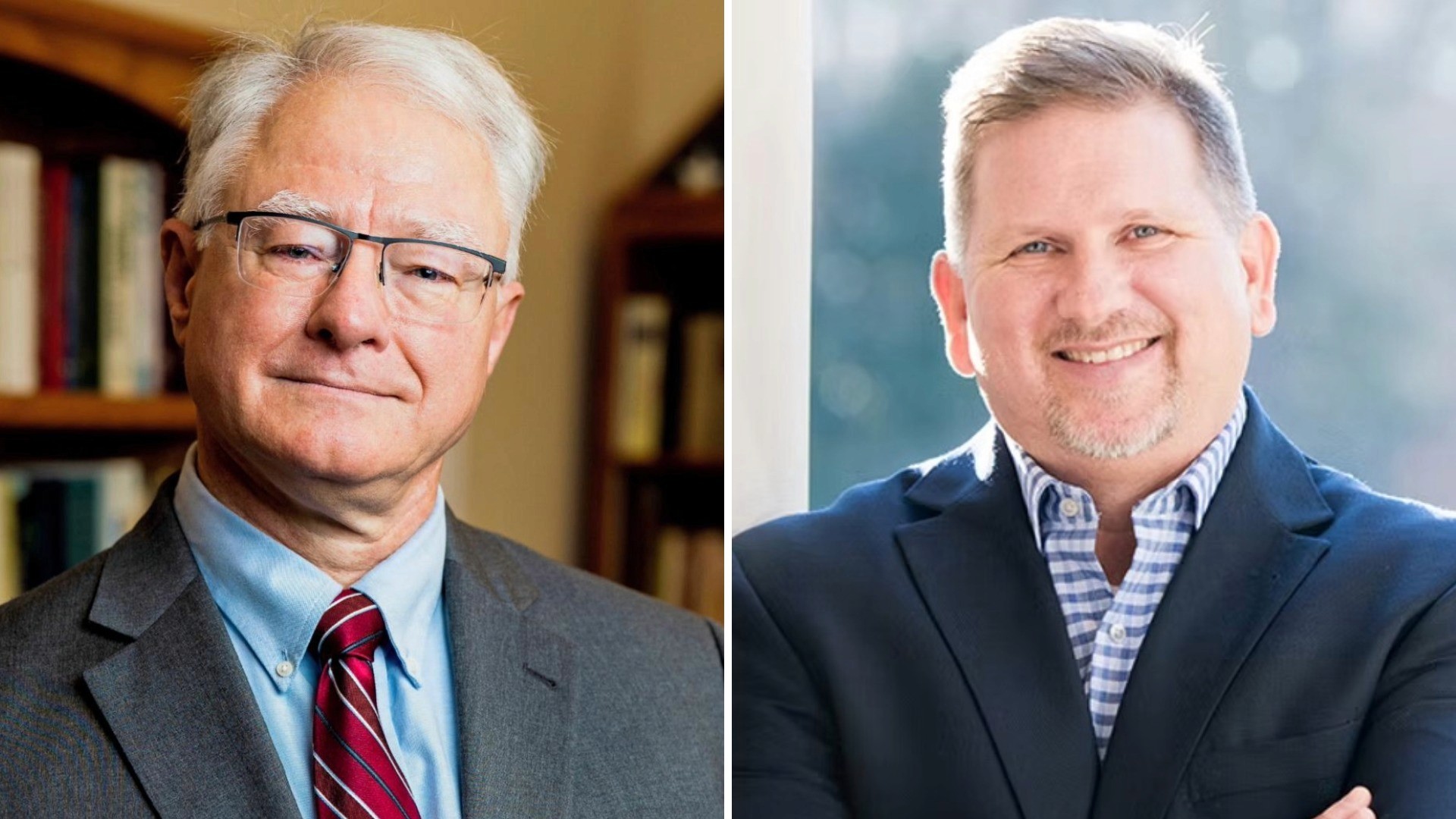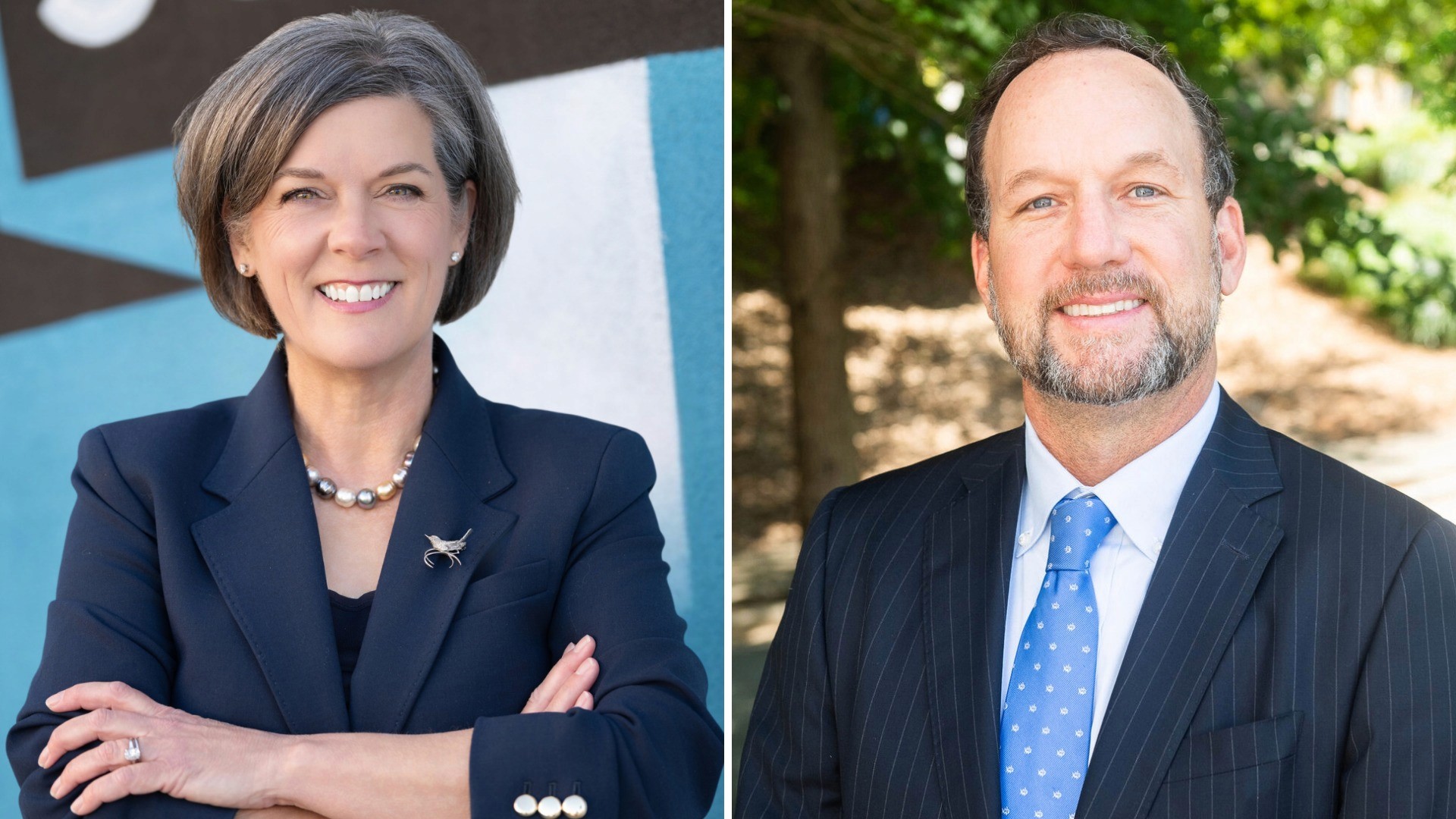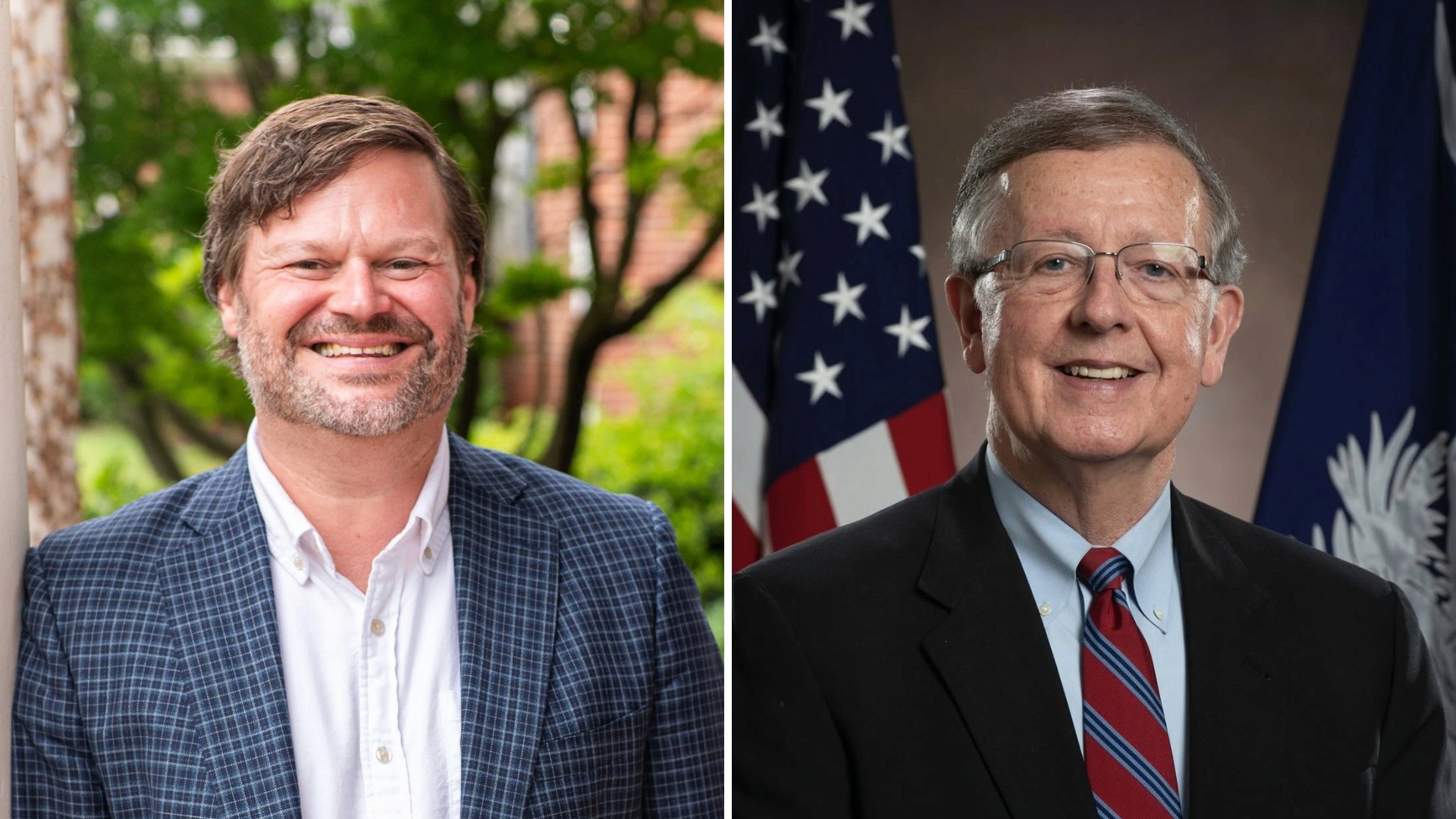
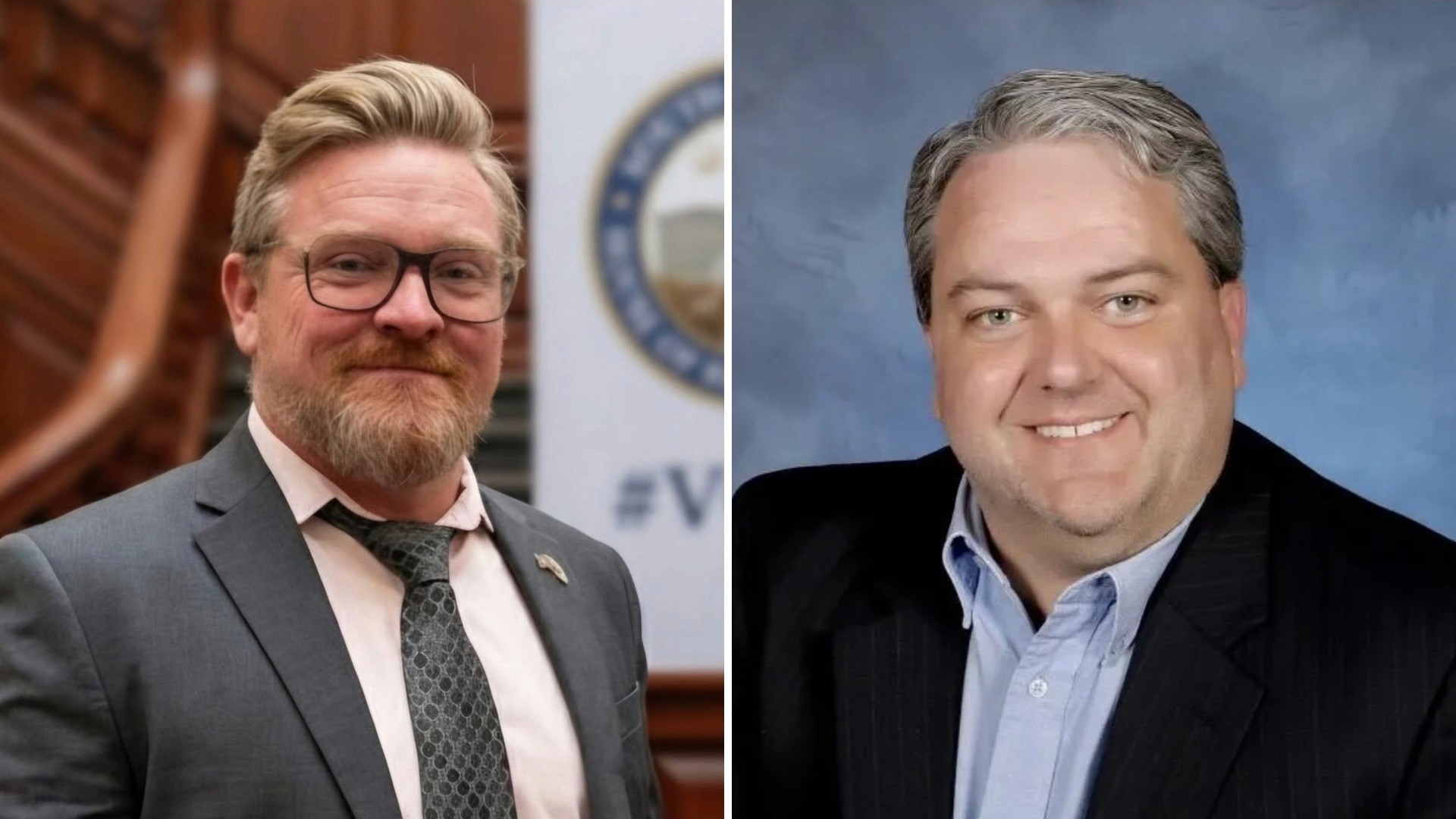
Who's running for South Carolina House of Representatives in District 28? Meet Alan Buckalew and Chris Huff, the candidates on the ballot in the November 3, 2026 general election. Hear where they stand on the issues facing voters, then share this episode with your neighbors before Election Day.
How the interviews worked:
All candidates received the same question at the time of their invitation to join us, and they were given 10 minutes for their interview. Candidates were allowed to bring along a companion, such as a campaign manager, family member, or friend, and to record our session themselves. There were no edits made to the interview.
Candidate links:
Introduction
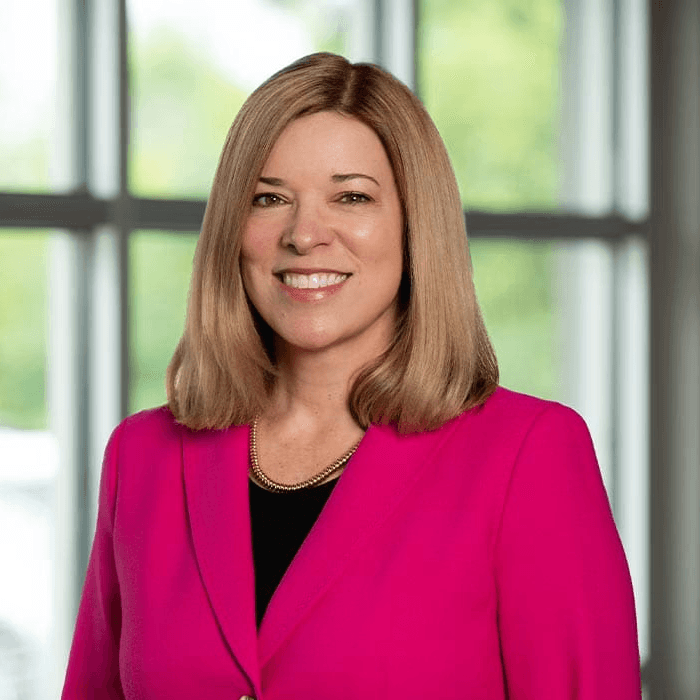
Katy Smith:
When you go to the polls on November 3rd or during early voting, you have the chance to vote for important offices such as U.S. Senate, U.S. Congress, governor, and state House members. We want to help you get to know your candidates so you can make an informed decision.
I'm Katy Smith with Greater Good Greenville, and on this episode of Simple Civics Greenville County, we feature interviews with your candidates for State House of Representatives District 28, Democrat Alan Buckalew and Republican Chris Huff. District 28 generally covers southern Greenville County, including parts of Simpsonville, Fountain Inn, and Pelzer.
Here's how the interviews worked. All candidates received the same questions at the time of their invitation to join us, and they were given 10 minutes for their interview. Candidates were allowed to bring along a companion, such as a campaign manager, family member, or friend, and to record our session themselves. There were no edits made to the interview.
We've put links to the participating candidates' preferred internet presence on the episode page. First up is Alan Buckalew. I'm pleased to be here with Alan Buckalew, who is running for South Carolina House District 28. Thanks for being here, Alan.
Alan Buckalew:
Thank you for having me. I appreciate it.
Meet Alan Buckalew: South Carolina House of Representatives District 28 Candidate
Katy Smith:
Tell us about yourself and why you're running for this office.
Alan Buckalew:
So my name is Alan Buckalew. Hey, everyone. I'm running for District 28, as you said. I was a medically retired former U.S. Army paratrooper. I served for 12 years overseas, a few tours in Afghanistan, and I was medically discharged after 12 years of service due to injuries I sustained.
After I got out of the military, and that was unexpected for me, I was trying to figure out what I wanted to do next. I began to analyze my life and whatnot, so I decided to take advantage of the GI Bill. Very grateful for that.
I went to school at USC. I studied psychology and social work. I minored in child advocacy studies and juvenile criminal justice. What propelled me to do this was I myself was a survivor of childhood trauma and things of that nature, and it was a means for me to pay it forward and my desire to serve, which also led me to the military.
Once I completed school, I went on to do a little bit of time with Greenville County Schools as a truancy officer. And then after that, I worked for a little while with the Department of Social Services as a case manager for child victims.
During my time working in those fields, I came to a similar conclusion that a lot of times what looked like abuse or neglect or the cause of truancy was a socioeconomic thing more than it was something egregious. I then wanted to go ahead and pursue my master's in social work. Unfortunately, during that time I was stricken with a rare illness called Guillain-Barré syndrome. It's a neurological disorder, left me a paraplegic for several months.
Once I finished that, I decided it was time for me to change mission, switch gears. I currently now work as an in-home health care aide for elderly people with various disabilities.
I'm a father of four. I love my children; they're the light of my life. I'm mostly a girl dad. I got three girls, one boy, and I run the whole gamut: I got seven, 16, 19, and 20. Happily married.
What really instigated me deciding to run, when I look back at my life, I recognize that my life has been one of public service. I like people. I like helping people. And a mantra I live by is the oaths of service that I took didn't end with a graduation ceremony or discharge papers.
So I've come to the conclusion that I feel well-equipped to represent my community in Columbia and, as a member of the working class and with my lived experience, to work towards helping us solve our problems.
Katy Smith:
Thank you. What do you believe is most on constituents' minds that you can address should you win?
Alan Buckalew:
Well, when you look at the generic polling data, what people are concerned about tends to be the same regardless of affiliation, in my experience. People are concerned about infrastructure growth, the state of the roads, education, economy, etc.
Part of the problem with that is South Carolina has been one of the fastest growing states for a decade or more. My family and I live in Simpsonville, and the Upstate as a municipality has been one of the fastest growing in the country for longer than that. To me, the expression that I know of is growth and prosperity, but we seem to be lacking in the latter.
I feel that there's a need for someone with my kind of experience to go in to help get these budgets passed on time and to make sure that the funds in those budgets are being allocated to address the concerns of the constituents of our communities that we're representing.
I feel that I'm able to do that. I know the problems on the minds of my fellow constituents, potential constituents, and my community members, my neighbors, because I am of the working class. I have the same lived experience as them. I have children that I'm concerned about their futures and the opportunities available to them.
With all of the growth we've experienced, we still rank near bottom in almost every category anyone would discuss. We're towards the bottom on education, we're towards the bottom on infrastructure, we're towards the bottom on health care. So those are the things that need addressing and those are the things that I intend to address.
Katy Smith:
Thank you. What would be your plans to address those constituent concerns and interests?
Alan Buckalew:
Well, first and foremost, and a pledge I would like to make for posterity's sake, is that I won't be bought by large finance special interest groups, lobbyists, and PACs. I want to directly address the concerns of my constituents, which I share, as I've said, as a fellow member of the working class.
There's a lot to unpack there, but one, getting these budgets passed on time, seeing where the money's going, making sure it's going where it needs to go to improve our infrastructure, to improve our healthcare, to raise wages, to keep housing affordable, especially with growth. We can't allow the growth to get ahead of the infrastructure.
It's culturally enriching that we have so many people moving from out of the area here. It's great. I love it. Growth can be exciting, but we don't want to displace native South Carolinians. We don't want to price them out of being able to afford to live where they've lived all their lives, sometimes for generations.
A particular concern of mine and something that is intimate to me is wages for tip-based industry workers. They occupy a lot of real estate within the working class demographically, and we're one of the lowest paid states hourly for that industry. No tax on tips sounds great on paper, but it doesn't really equate to much in terms of changing their lives. I would like to work towards seeing if we can raise their hourly wages.
There's obviously things like AI and data centers. We need to ensure that the policy and the development is in front of the implementation. The ramifications for neglecting that could be quite severe. This is a major new thing and it's going to have a massive impact one way or the other.
I want to work across the aisle, and I want to get things done. I don't want to get bogged down in the trenches of culture wars that don't have any real impact. I want to remain at the kitchen table and not be deployed off to the trenches of said culture wars.
People need to be able to put gas in their tanks, and then they need to be able to arrive to work safely and on time so that they can earn the money that they need to be able to bring food home to their families. Those are the things we need to prioritize, and I feel responsible to be a part of that and to do that for my community, for my children, for the people that I'm representing.
There's so much more in that, and that's the job that I want to do. I feel compelled to do. I just want to serve. I would appreciate the opportunity to serve, and I want to promise the people that are supporting me that I will be working for them. You're not just a leader; you're a representative of the people. That's my goal. That's my next mission in life.
Katy Smith:
Thank you. We have a little bit more time. Is there anything else you'd like to share with listeners?
Alan Buckalew:
Sure. Yeah, I would like to tell people every election is important. It was ingrained in me from a young age that voting is your civic duty. The veteran community very much would like our fellow citizens to be involved in politics and to vote and to pay attention, to vote with their conscience.
You can't just expect things to change and not take an active role in that change. I would like to advise people, regardless of their affiliation, regardless of the culture of their individual family, to look at the candidates, look at what they're saying, look at what they're doing, and even be willing to be adversarial to those that you've elected. That's what keeps them honest. That's what keeps them in their lane. That's what keeps them doing their job.
So get out and vote. I'm not telling you who to vote for. Just get out and vote. And vote for the person that is saying something that means something to you.
Katy Smith:
Well, thank you so much for joining us. And thank you so much for your willingness to serve.
Alan Buckalew:
Thank you so much for having me. It's an honor and a privilege.
Meet Chris Huff: South Carolina House of Representatives District 28 Candidate
Katy Smith:
Next up is Chris Huff. I'm pleased to be here with Chris Huff, who is running for re-election for South Carolina House District 28. Thanks for being here, Chris.
Chris Huff:
It's my honor. Thanks for having me.
Katy Smith:
Great. Tell us about yourself and why you're running.
Chris Huff:
Well, I'm a father of four, happily married, and been married for 28 years now, and grew up in South Greenville, and been there virtually all my life, and at least been a part of that community all my life, and got a lot of family there.
When this opportunity was presented to me a couple years ago, really what spiked my interest and quite honestly convinced me to get into it was just seeing the state of our nation, our state, our local community, with four kids who now are starting to get married and have their own families.
I just became convicted that if I have an opportunity to do this and try to make a positive difference and be a positive part of the solution rather than a part of the problem, and I don't take that opportunity, then I shouldn't complain about the ones who do. So I stepped out, and we did it, and here we are two years later, three years later after considering the campaign.
Katy Smith:
Thank you. What do you believe is most on constituents' minds that you can address should you win?
Chris Huff:
Well, there's a lot of stuff on constituents' minds. You would be amazed at some of the emails and, quite honestly, just concerns and various issues that I have heard from constituents just over the past two years now, and then even as I was knocking doors and campaigning.
I believe it can all be summed up with one simple statement, and that is that when it comes to state office, which is what we're running for, people want to know that state government is working to do what state government is supposed to be doing. That state government is involved in that which it should be involved in and not involved in that which it should not be involved in.
I think that's the primary thing that I've tried to focus on: what is the responsibility of state government? What are the concerns that I've heard from folks out on the road as I was knocking doors and just as I've gotten emails?
Those being infrastructure, budget accountability and responsibility so that taxpayers aren't saddled with unnecessary financial obligation, safety, law enforcement, fire departments. Some of that comes back to more local government, but it still is a concern that we get to hear about quite often.
No unlawful, illegal residents. One of the things that surprised me when I was knocking on doors is the people that bring that up the most are people that have come to America legally. They were the ones who said that the most frequently to me.
People are concerned about education. Obviously South Carolina hasn't had a great track record as far as rankings are concerned. We'll go with that. So people want to see and want to know that they're going to have great opportunities for education and success in the future.
Katy Smith:
Thank you. What would be your plans to address those constituent concerns and interests?
Chris Huff:
For the last two years, I've been on Education and Public Works, which is an extremely busy committee. We cover everything from K-12 through higher education. On the public works side, we cover everything from law enforcement, fire departments, public safety, SLED, DOT, anything that's in the public works sector, we deal with. So, a lot of roads issues.
I have been able to see up close as the legislation has come forward. We've worked on that, and we've worked very hard to try to put forward legislation, bills that would help advance and make it easier for our roads to be improved, for our infrastructure to be improved. We've tried to make sure that our law enforcement and our fire departments are well equipped and they have what they need in order to take care of the communities.
Obviously, when it comes to education, that's a mammoth one. That's just a huge thing, depending on what you're dealing with and what day it is. Sometimes you're dealing with elementary. Other days you're dealing with the whole K to 12. And then some days you're dealing with college. You're constantly trying to improve those things.
We try to put bills forward that help those institutions be the best version of themselves, whether it's the fire department and a local sheriff's department, or an education institution. You want them to be the best version that they can be of themselves. And so what we want to do is put legislation forward.
What I've tried to do is focus on legislation that improves life for the citizens of South Carolina, specifically for the citizens of District 28. That's who I represent. So when a bill comes forward, my primary concern is how would the majority of the people in 28 want me to vote on this issue? Not how does Chris Huff believe, not what does my mom think. What does District 28 want here?
That's what representative government is about. That's how I've tried to operate and will continue to strive to operate moving forward if the people see fit to keep me there.
Katy Smith:
Thank you. We have a little bit more time. Is there anything else you'd like to share with listeners?
Chris Huff:
Yeah, I think we have a great place here in the Upstate. We have a great community. District 28 is a wonderful place. I'm a Woodmont grad. I grew up there. I've been raised by many of the people that still live there.
The resources that we have here are not just land and natural resources, which are all phenomenal, but it's our people. We have businesses striving to be here. They all yearn to come to South Carolina, but also the Upstate.
I think the misnomer a lot of times is that we have to create some kind of incentive to get them to come here. That may be the case from time to time. You may have a huge business that's in competition—we're in competition with some other state—but the vast majority of businesses want to be here because we have a great and stable workforce.
We have great people that companies can rely on. They can rely on our folks to come to work every day. They can rely on our folks to get the job done. We have a great cost of living here. We have a lot of great things. And I think all of those things contribute.
One of the statistics that gets said to us quite often is that we are the number one state for move-ins versus move-outs. And the Upstate is one of the largest contributors to that. There are several regions of our state who seem to be in the top of those numbers, but obviously Greenville is right there among the top. And these are all reasons.
On the education side, the one thing that I would say there is my goal is to see students become successful, self-sufficient, thriving, contributing adults. When I say contributing, I mean contributing to society, not necessarily contributing financially. Obviously, everybody pays taxes and that's a factor, but I'm talking about folks who help make society better.
I believe that the community in South Greenville does a great job of pouring into folks and pouring into kids and pouring into students as they grow. That's what I want to continue to see.
As long as District 28 is willing to send me to Columbia, I'm honored and thankful, and I'm willing to go and do my best to represent their best interests and try to make South Carolina, but also South Greenville, the best it can be for our folks.
Katy Smith:
Well, thank you so much for joining us and thank you for your willingness to continue to serve.
Chris Huff:
Well, thank you.
Credits
Simple Civics: Greenville County is produced by Podcast Studio X and is powered by BuzzyPod.
A Greater Good Greenville project.