This episode of Simple Civics Ed Talks is brought to you by InformEdSC.org, South Carolina's most comprehensive, non-partisan data center for critical information about public education. To explore district and state-level data on students, teachers, and funding, visit informedsc.org.
Simple Civics: EdTalks is sponsored in part by Greenville Federal Credit Union, founded in 1968 by nine Greenville County Schools educators, and today serving 35,000 diverse members across Greenville County. Greenville Federal Credit Union, join and prosper.
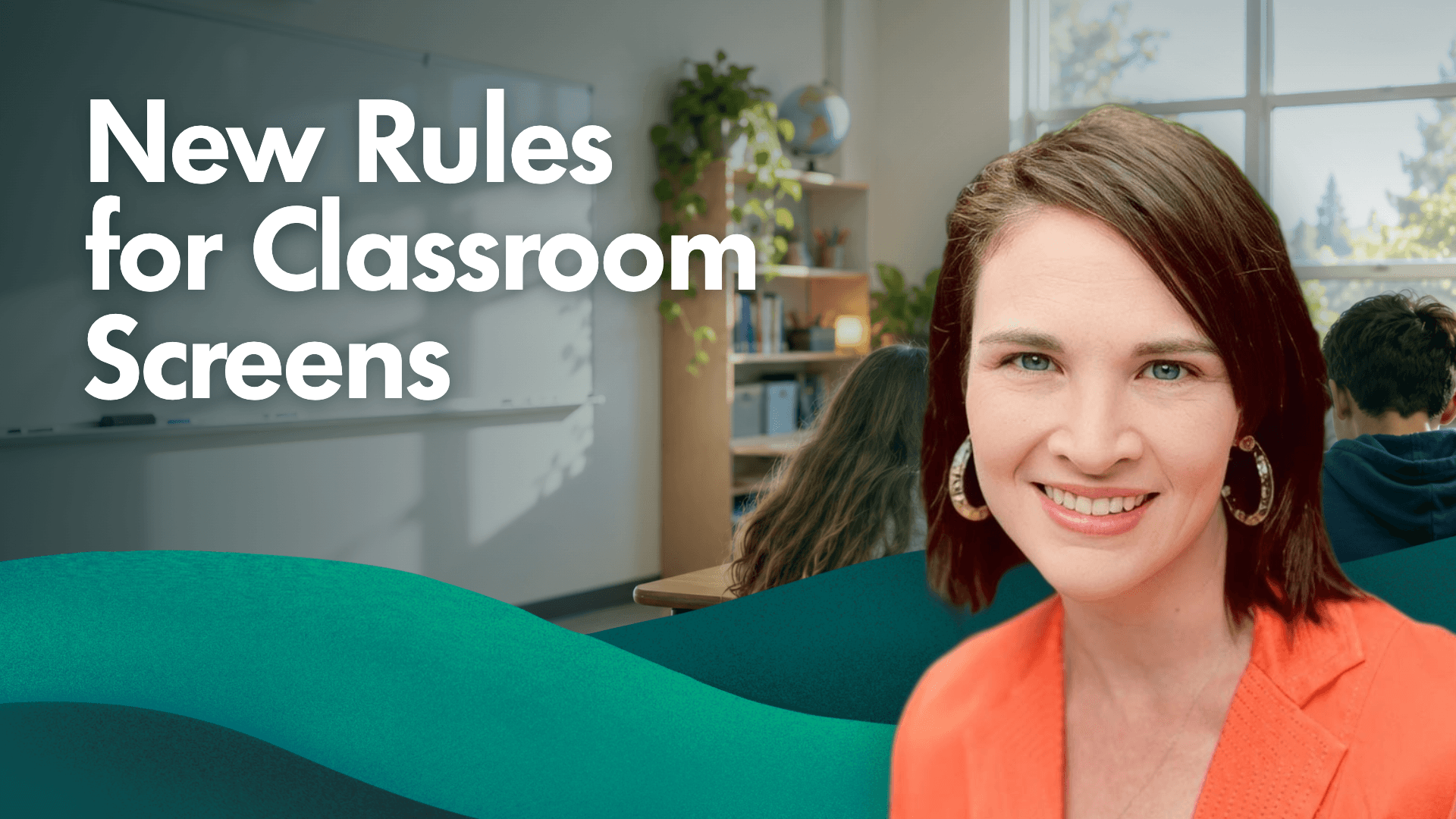
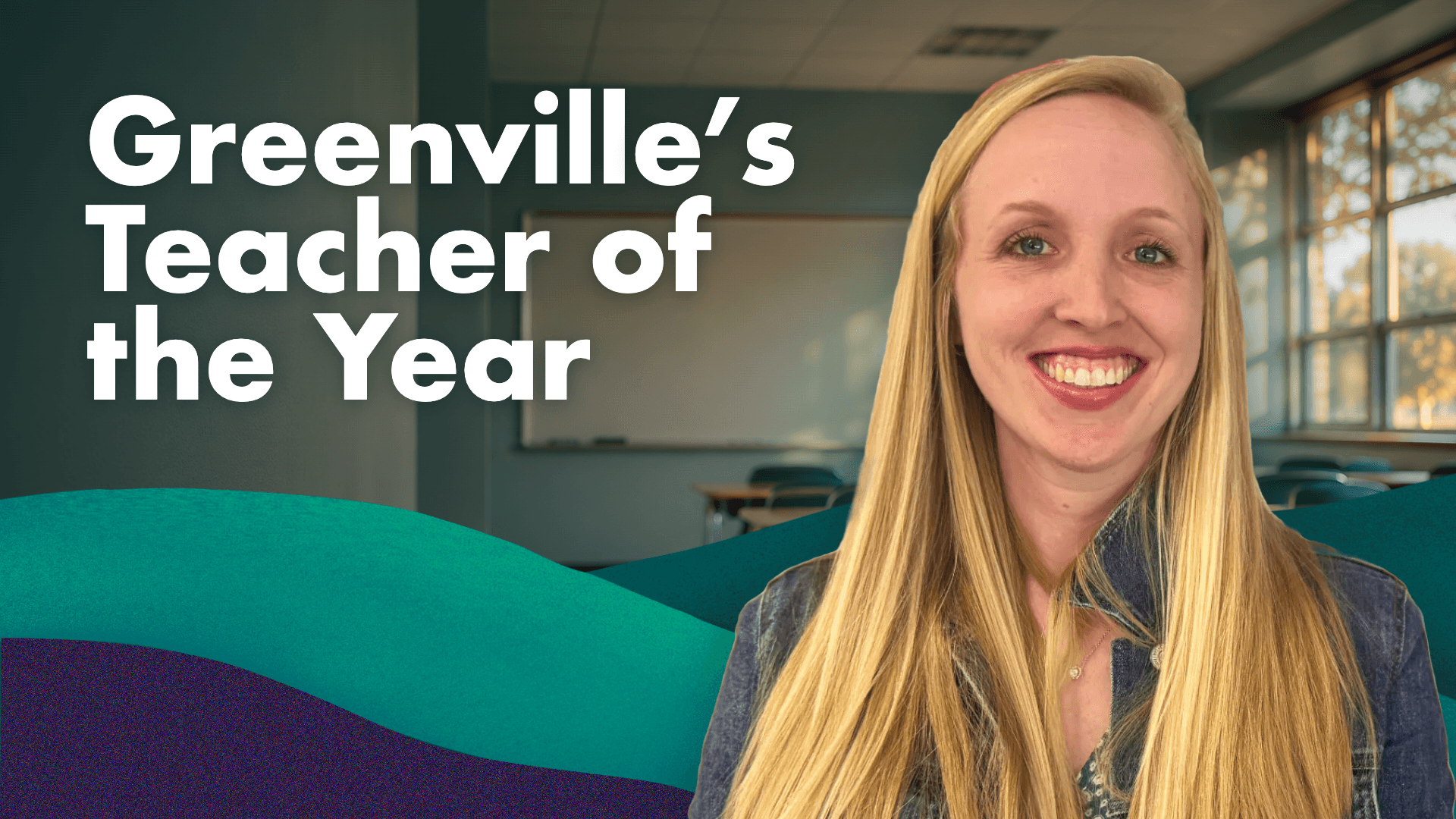
On this EdTalks episode of Simple Civics: Greenville County, the 2026-27 Greenville County Schools Teacher of the Year shares why teacher voice matters and how she makes civics real for students.
Mary Grace Carlson is the instructional coach at Carolina High School, where she has taught government and economics for seven years. She almost didn't graduate from high school herself, then earned her education degree at Clemson and taught in Indianapolis with Teach For America before coming home to South Carolina. She talks with Catherine during American Education Week.
Mary walks through the Teacher of the Year process, from the nine application questions to the surprise top 10 classroom visit, and her goal of helping teachers use their voice at the school, local, state and federal levels. She shares the hands-on strategies behind her classroom motto, "Your Voice Matters": student handbook amendments that changed Carolina's tardy policy, mock college acceptance letters for first-generation students, and a Community Service Day with local nonprofits. And she tells how one student brought the YMCA's Youth in Government program to Carolina, now her favorite moment of every year.
Resources:
Meet Greenville County's 2026-27 Teacher of the Year
Catherine Schumacher: There are more than 5,000 teachers in Greenville County Schools, and each year one of them is selected as the Teacher of the Year. It's a huge honor and a big responsibility. The journey to District Teacher of the Year is no small feat. It begins with selection at the individual school level, followed by an extensive application, a competitive review to narrow down to the top 10 finalists, in-person interviews and unannounced classroom observations evaluated by a panel of community and education leaders. I'm Catherine Schumacher with Public Education Partners. And on today's Simple Civics EdTalks, we are joined by the incredible educator who rose to the top during that process this year, Mary Grace Carlson, the instructional coach at Carolina High School and the 2026-27 Greenville County Schools Teacher of the Year.
Mary brings great passion, heart and creative energy to her work with students, families and fellow educators every single day, and I'm excited for you to get to know her too. As we celebrate American Education Week, we hope you enjoy this inspiring conversation about why teacher voice matters and why public education is so vital to our shared future.
Catherine Schumacher: Mary, thank you so much for joining us today on Simple Civics EdTalks.
Mary Carlson: Thank you for having me. I'm very excited to be here.
Catherine Schumacher: Of course. Well, so there was a lot of coverage about you when you were named the Teacher of the Year, but I'm sure that folks would love to hear a little bit more about your journey into the classroom in your own words. So why don't you tell us a little bit about how you came to Carolina High School, one of my very favorite high schools, and the role that you play there and maybe a little bit too about the school and the school students and the families that you serve?
From almost not graduating to Teach For America
Mary Carlson: Sure. So my decision to become a teacher was shaped early on by my home life. I absolutely love going to school. In elementary school, I was student body president, all A's, but by the end of high school, I actually almost didn't graduate. It was a lot of outside factors. Working two jobs, lacking support at home and frequent moves made school really difficult for me. And that's when I realized just how impactful teachers are for students. And teachers who believe all students can succeed change lives. And I wanted to do the same for others. So my background is actually unique because I'm traditionally and alternatively trained as a teacher. So I'm... Yeah.
Might as well explore them all. But yes, I pursued my career in education at Clemson, where I got my degree in secondary education. And then after that, I joined a program called Teach For America, whose mission is to develop and support leaders to transform and expand opportunities for every single student. So Teach For America is actually an alternative training program through AmeriCorps. You get placed in a school around the country based on needs, and normally those schools qualify as a Title I school. You receive specific training on how to effectively teach and ensure that you're providing a high-quality education for all students, no matter their zip code. I was assigned to Indianapolis, Indiana, for two years.
That's where I met my wonderful husband and really started my educational journey. And I joined Teach For America because I have a passion for educational equity and wanted to grow as a person and educator before moving back home, because I never really got out of South Carolina, and I really wanted to experience more of the country and individuals to help grow as a person and as an educator. So eventually moved back to South Carolina when my husband, who's also an educator, got accepted into the PhD program at Clemson. And so right when we moved back, I applied to Carolina High School and have been teaching here for seven years. Carolina shares many similarities as my school in Indianapolis.
And so I knew that's where I wanted to work. We have similar demographics and also qualified as a Title I school. Here, I've been serving as department head and got the opportunity to have all these amazing leadership experiences, which now leads me to being the instructional coach at Carolina High School. So the role looks a little bit different, but one of the things I love about it is that I am actually working with more departments than just social studies, and I get to be in even more classrooms and get to meet even more students, and I get to learn from all the amazing teachers here and help our school continue to grow and provide high-quality education.
Catherine Schumacher: Yeah. Oh. All the pathways. Sure. Yeah. Yeah. Yeah. And raise the outcomes for students every year. Carolina is really doing some great stuff. We did actually a podcast on instructional coaches, so if people are curious about what the role of the instructional coaches, I encourage you to check out that episode with Erin Rago and Mary Leslie Anderson, because we talked about the Teachers for Teachers and that really important role. So that's really cool. That's really neat.
What Teacher Forum does for Greenville teachers
Catherine Schumacher: Yeah. Yes. So talk a little bit about, explain what Teacher Forum is, so people who are listening, if they don't know about Teacher Forum, because we love, we work with Teacher Forum as well at Public Education Partners.
Mary Carlson: Yeah, sure. Teacher Forum is where any teacher of the year in the whole district is invited to participate in Teacher Forum. And this is where we get together and network and collaborate with one another. And so we'll have an upcoming workshop where leaders in the Teacher Forum are gonna be creating things for teachers, where we can come and discuss educational experiences, identify areas of growth and see how we can support one another. And I'm just really excited to participate in it, because I know I have my school community, but now I feel like this is allowing me to even branch out and feel even more of that community that Greenville County Schools is offering and is really important for teachers to have, so very excited.
Building teacher voice in the community
Catherine Schumacher: Yeah. Yeah. Yeah. That's awesome. Well, okay, so speaking about community and engagement and advocacy and all of those fun things, so last year you were a member of our Public Education Partners Teacher Fellows Program, which is our six-month policy and advocacy fellowship for teachers. Been around for six years, seven years. You know, I know you feel really strongly that teacher voice matters. You talked about that in your celebratory speech from the stage at the Teacher of the Year Breakfast. Is there a particular issue or theme that you're sort of weaving into your message as Teacher of the Year? And what would you kind of want the community to know about that?
Mary Carlson: That's a great question. Yes. So I think the biggest theme that I would want is honestly to be able to increase my own knowledge and help other teachers increase their knowledge on how to actually share our teacher voice in our community. So at the school level, effectively collaborating and communicating with administration about school rules and logistics. Then local levels, how to speak at a school board meeting or increasing participation at attending city or county council meetings. And then even up to the state and federal level, how to keep up to date about those policies that impact our schools and how to increase teacher voice at that level. And so that's kind of the theme, is just advocating and increasing, hopefully, the knowledge surrounding that, so we can continue to build that voice for teachers. That's one of the reason I'm excited for the Teacher Forum, 'cause I'm serving on the advocacy council.
Catherine Schumacher: Yeah. Yep.
Mary Carlson: And yeah, so I think that's one of the biggest themes. So I just want the community to know that we have so many people in this community that is supporting education and are wanting to continue to grow and do what's best for our students, because when our students are thriving, our community is thriving. And one of those ways is just to increase our teacher voice and, yeah, continue to improve our educational outcomes.
Catherine Schumacher: Yeah. Yeah. No, I think that's such a great sort of theme and lesson, and obviously one that's near and dear to our work. And I think it's really exciting to see that sort of leadership development within the Teacher Forum and the really intentional trainings that are sort of being built out. So excited to cross paths with the entire Teacher Forum in the months to come. So that's always fun.
Making government and economics real for students
Catherine Schumacher: So you're a government and economics teacher. You are a social studies person. So those are subjects that they're so important to students as they sort of transition into adulthood. So what are some of those unique strategies and hands-on approaches that you're using in your classroom to take these sort of more abstract political and economic concepts, like how do you make it real for the kiddos?
Mary Carlson: So that's actually why I love teaching those subjects. Like you said, government and economics directly impact students' everyday lives. And so I take a very intentional and mindful about how I'm ensuring that my students are receiving engaging, rigorous and standards-aligned lessons, with the goal of, so for example, government is not only to learn how the government works, but how can students be involved and become active members living in our community.
Catherine Schumacher: Civics, I mean, that's civics. Yeah.
Mary Carlson: Correct. Yes. All that civics education and engagement. So how can we help increase that? And government class is an excellent way to be able to hopefully help continue that growth. So some strategies I have in the classroom are simulations and individualizing lessons. And lastly, hands-on organizing events and field trips. So an example of a simulation is one of the projects that I do is amendments to the student handbook. Students learn about the amendment process by proposing an amendment to our student handbook. We share out those amendments. Students count as the House of Representatives. The teachers are the Senate. Everyone votes. And then the group presents those findings to Principal Carrick and other administrators.
And so some of the amendments that are passed are actually then implemented at our school. And so some of those things were feedbacks on tardies and changed and updated a tardy policy. We now have a sign for our school parking lot out there. So just getting kind of those, going through simulations but making it relative to their lives in the classroom to help hopefully foster that engagement is one strategy I use. One other one is the tailoring lessons and assignments to students' interests and goals. So for our personal finance portfolio in economics class, students create a personal finance portfolio based on their actual chosen career. But before we start this major project, I find out what each student's dream college is, and then I create mock acceptance letters for each student based on what their number one college was.
And when students get their letters, they get in groups and are tasked with doing their college move-in checklist. Right. And yeah, so they explore the dorms online and help determine what they might need for move-in, 'cause many of Carolina's students are first-generation college students. So creating those individualized letters is a small way to share that I believe in them and that they can accomplish their dreams, so.
Catherine Schumacher: Yeah. Yeah. Yeah. Yeah, if they see it, they can be it sort of thing, like, they can dream it that way. That's really cool.
Mary Carlson: Correct. Yeah. So that's one of the things I like to help, is make it personalized to the individual student. And then the very last thing of one of my strategies that I absolutely love is field trips and events. So being actively involved in events at our school. So we don't just have the voter registration drive partnered with the League of Women Voters. Students are actively participating in that. They're creating flyers, attending training and actually assisting the drive. So they're getting that hands-on experience, not just learning about it or like, "Hey, stop by the voter registration drive." That's important too, but then having a more active role in some school events that are tailored around civics education.
And then my favorite one that we started last year, which was Community Service Day. This is for all government students, where we partner with multiple nonprofits like Annie's House, Meals on Wheels, Harvest Hope, Animal Shelter, where one day we all go, everyone is out in the community serving and volunteering to make sure everyone has experience giving back, to hopefully increase that civic engagement.
Youth in Government and a student who spoke up
Catherine Schumacher: Yeah. Yeah, that's awesome. Yeah. And also learning about nonprofits. I mean, I think that's something that a lot of kids like, they don't know about. I certainly didn't know about nonprofits as a career path in my... That's so awesome. So high school students, they're... and sort of the work that you're talking about, taking them out into the community and giving them ownership overseeing their future and things, like they are forming their first, like, major perspectives of the world. And you know, as the parent of two relatively recent high schoolers, sometimes those funny, the funny unexpected classroom moments. And so I always like to ask the Teacher of the Year, like, do you have a real moment of joy that you remember that, you know, with your students that really captures, you know, your why as a teacher?
Every educator has their why, of course, and I'd love to hear your sort of story about something amazing that happened.
Mary Carlson: Yeah. Oh, yeah, there's so... gosh, there's so many countless moments of joy like daily that you had experienced, but the big one moments that stick out the most is when the students feel empowered. And so my favorite moment every single year is when we take our Youth in Government trip to Columbia that is run by the YMCA. This is where students write, debate and present bills and go through a whole simulation of how a bill becomes a law, but they actually get to do that at the State Capitol. And seeing just my students up there and presenting at the State House, sharing their voice, is one of the most rewarding experience I have the pleasure of as a teacher. Many of my students share they feel like they do not see themselves represented by the government or that what they have to say does not matter.
And so being able to partner with an organization and provide an opportunity for students to express their voice to students from all over the state really captures my why. My classroom motto is "Your Voice Matters," and this event allows students to see this in action. And actually, I did not know about this program. It was a student four years ago who brought this to me and asked if I would be an advisor because she was actually... yeah, she was at another school. Our school didn't have a program. Mm-hmm. And she advocated for our school to have it. So seeing students advocate and be active members of our school community and being involved in civics education is what truly brings me joy.
And so I just feel privileged and honored to be able to play a small role in supporting them and what their goals they have for our school as well. So that's one of the really great moments of joy...
Catherine Schumacher: Oh, that's awesome. And they had YIG. That's great. Yeah.
Mary Carlson: ...in my teaching career.
Why public education matters
Catherine Schumacher: That's amazing. I also love the through line of teacher voice and student voice and how do you express your, you know, what you need and your perspective in a way that's thoughtful and respectful and evidence-based and all those sorts of things. I love it, Mary. That's so great. So last question. You know, is there anything... I think one of the things we really value when we speak with educators on Simple Civics EdTalks is the idea that you have a perspective on what's going on in our schools that's just so different from people on the outside. And I think it's so important, again, to give educators that voice. So, you know, is there something else that you would like to share with listeners about why public education matters so much to you?
Mary Carlson: Yes. So public education matters to me because it creates a pathway for any child to receive education in our community, no matter your background. And our community thrives when every student is receiving an excellent, high-quality education. Everyone benefits, and it takes everyone to make that happen. So I'm really thankful to live in a community where education is a priority, and it has so much support like Public Education Partners, not just for students but for teachers. I was able to do that fellowship, mentioned earlier, and that's what really helped spark some of the things I did this year and what I wanna do for being Teacher of the Year. Helped me feel very empowered to be able to do that. And so for me personally, I was taught the value of public education, and when I had to become an adult early on, public education is what provided me a way to change that trajectory in my life.
So that's why it really does matter a lot to me, to ensuring that every child has that opportunity to receive an education. And it is a privilege, once again, to live in a district as well that invest so much in public education and not only continues to prepare students to be ready for any college or career path, but also provides opportunities now for students to receive training, obtain certifications and attend college classes while in school through programs like Graduation Plus and other programs. So those are just one of the reasons, is because this truly provides a pathway for any child living in our community, regardless of their backgrounds or life circumstances.
Catherine Schumacher: Yeah. It's really, you know, as we always say, it's core civic infrastructure. Like, our schools make so much work in our communities. And the reason our schools work is because of amazing educators like you, Mary. Thank you. Congratulations. Thank you so much for sharing a little bit of your story and your insights into everything, the amazing work that's happening at Carolina High School and Teacher of the Year process and all of that. And just congratulations. Hope you have an amazing year.
Mary Carlson: Thank you so much. I look forward to continuing to seeing you this year.
Credits
Simple Civics: Greenville County is produced by Podcast Studio X and is powered by BuzzyPod.
A Greater Good Greenville project.